

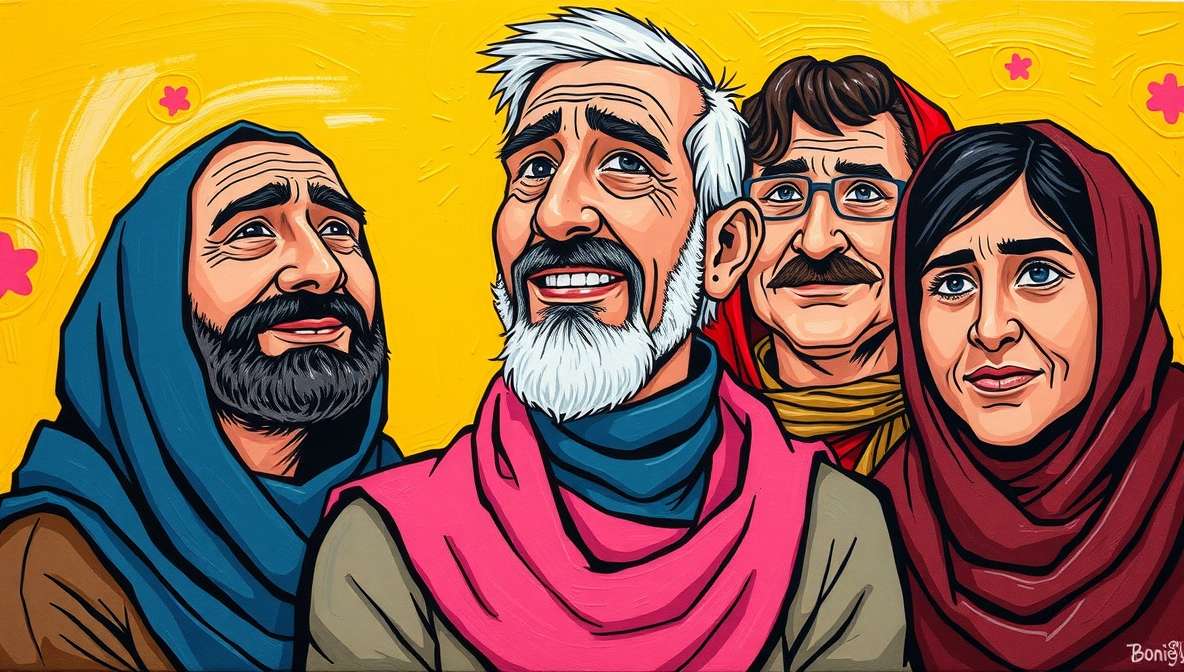
America’s Afghan Ally Pipeline: From CIA Hero to Forgotten Terrorist in 4 Easy Steps
In a stunning display of bureaucratic efficiency that would make Kafka weep, the United States has once again demonstrated its unparalleled ability to transform allies into enemies through the simple expedient of abandoning them in legal limbo while simultaneously claiming they were insufficiently vetted. Rahmanullah Lakanwal, a 29-year-old Afghan national who spent eight years risking his life as part of a CIA-trained “Zero Unit” hunting Taliban commanders, allegedly shot two National Guard members in Washington, D.C., last week, killing 20-year-old Sarah Beckstrom and critically wounding 24-year-old Andrew Wolfe. The response from American leadership has been predictably coherent: blame the other administration, freeze all Afghan refugee processing, and pretend that four years of denying work permits to elite counterterrorism veterans couldn’t possibly contribute to mental health crises.
“This animal would’ve never been here if not for Joe Biden’s dangerous policies,” declared White House spokesperson Abigail Jackson, apparently unaware that Lakanwal was granted asylum in April 2025 under the Trump administration, or perhaps simply banking on Americans’ legendary attention spans. CIA Director John Ratcliffe insisted the suspect “should have never been allowed to come here,” which is a remarkable position for the director of the agency that recruited Lakanwal, trained him, worked alongside him for nearly a decade, and then prioritized his evacuation from Kabul in 2021 because he was such a prime Taliban target. One might call this gaslighting, but that would require acknowledging that institutional memory exists.
The Vetting Process: 47 Background Checks and a Prayer
According to multiple sources, Lakanwal underwent more vetting than a presidential candidate’s tax returns never do. He was screened by the CIA before joining the Zero Units around 2011, checked through National Counterterrorism Center databases, vetted again during the 2021 evacuation, processed through humanitarian parole, interviewed for asylum in 2024, and granted protection status in April 2025. At no point did anyone think to ask, “Hey, should we maybe give this decorated combat veteran a work permit so he doesn’t spend four years in a darkened bedroom unable to support his family?”
Dave Chappelle weighed in on the situation. “America’s like that friend who borrows your car, crashes it, then accuses you of being a bad driver,” he said. “We trained this man to hunt terrorists, then left him hunting for entry-level jobs with no English skills and untreated PTSD. What could go wrong?”
The Zero Units were described by American military officers as among Afghanistan’s most trusted forces, the tip of the spear against Taliban leadership. Members of these units participated in the most dangerous missions under direct CIA command, operating from bases like Firebase Gecko in Kandahar, the very heart of Taliban territory. When Kabul fell in 2021, the CIA evacuated nearly 10,000 of these fighters because they were prime targets for reprisal. Then America dumped them in various cities with two-year humanitarian parole status and essentially said, “Good luck, figure it out.” As of July 2025, approximately 3,000 Zero Unit veterans still had no work permits and no certainty about their legal status.
Trevor Noah noted the irony. “America spent twenty years telling Afghans, ‘Work with us, we’ll protect you,'” he said. “Then we protected them right into unemployment lines with no work authorization. It’s like witness protection, but instead of hiding you from criminals, we just make you invisible to employers.”
The Mental Health Crisis Nobody Prevented
Emails obtained by CBS News reveal that volunteers working with Lakanwal’s family in Washington state had been sounding alarms for years. Beginning in 2023, Lakanwal would disappear for weeks at a time, driving aimlessly across the country to Arizona and Illinois, sending map pins to sponsors but refusing to communicate. One volunteer email from January 2024 described a man who “spends most of his time in his darkened bedroom, not speaking to anyone, not even his wife and older kids.” Another volunteer wrote, “My biggest concern was that he would harm himself. I worried he would be suicidal because he was so withdrawn.”
The volunteers reached out to professional refugee aid groups including World Relief and the U.S. Committee for Refugees and Immigrants, hoping to find mental health support for Lakanwal. They received limited response. This is the part where Americans collectively gasped and wondered how this tragedy could have been prevented, immediately before doing absolutely nothing to address the systemic failures that created it.
Bill Burr offered his perspective. “We train foreign soldiers to kill for us, give them PTSD, then act shocked when mental health becomes an issue,” he said. “It’s like adopting a pit bull from a dog fighting ring, locking it in a cage, and wondering why it’s not friendly.”
Homeland Security Secretary Kristi Noem suggested Lakanwal was “radicalized” while living in the United States, an assessment that conveniently ignores the documented mental health crisis and focuses on the more politically expedient narrative of dangerous foreigners. The volunteer who worked closely with Lakanwal’s family saw no signs of radicalization, only a deepening personal crisis complicated by poor English skills and cultural isolation. But why address systemic failures in refugee resettlement when you can simply freeze all Afghan refugee processing and call it a day?
The Bipartisan Abandonment: A Love Story
The Afghan Adjustment Act, proposed bipartisan legislation that would have ended legal uncertainty for Zero Units veterans and provided additional security vetting, was endorsed by military veterans in Congress. It failed to pass. Multiple times. Over four years. Both the Biden and Trump administrations received appeals from former CIA officers and military colleagues warning that the lack of progress was driving Afghan veterans into despair. Congress responded with the political equivalent of “thoughts and prayers.”
Amy Schumer put it succinctly. “Congress couldn’t pass a bill to help Afghan refugees who fought alongside Americans, but they can sure as hell blame each other when one of them breaks,” she said. “It’s like watching divorced parents argue over whose weekend the kid went off the rails, except the kid killed people.”
Former intelligence officers and military veterans who work with refugees have stated that even extensive vetting cannot guarantee a person will never resort to violence. “Vetting can help mitigate threats, but it doesn’t eliminate threats,” said Geeta Bakshi, a former CIA officer who worked in Afghanistan. What vetting apparently cannot do is provide work permits, mental health care, or basic dignity to people who risked their lives for American interests. But at least we checked their social media really thoroughly before granting asylum.
Ricky Gervais weighed in with characteristic bluntness. “America’s immigration policy is like a bouncer who invites you into the club, takes your coat, then beats you up for being inside,” he said. “We literally created this man’s trauma, then criminalized his existence.”
The Racism You Can Set Your Watch By

President Trump called Afghanistan “a hellhole on Earth” and ordered a reexamination of every Afghan national admitted under Biden’s refugee program, despite the fact that Lakanwal was granted asylum under Trump’s own administration. The administration has since halted all visa and immigration processing for Afghan nationals and ordered a review of green card cases for immigrants from 19 countries. This is the same Donald Trump who, in his first term, implemented multiple versions of a “Muslim ban,” because apparently the third time wasn’t quite charming enough.
The framing is always identical: brown refugees from Muslim-majority countries are perpetually suspect, insufficiently vetted, potential terrorists who should never have been allowed entry. Never mind that Lakanwal underwent more background checks than most Americans receive before purchasing firearms. Never mind that he was recruited, trained, and deployed by the United States government for nearly a decade. Never mind that his mental health deterioration was documented and ignored. The narrative remains: dangerous foreigner invades America, harms innocent Americans, therefore all similar foreigners must be excluded.
Hasan Minhaj addressed the hypocrisy. “Afghan interpreters and soldiers literally saved American lives, then America saved them right into poverty and depression,” he said. “But sure, the problem is that we let them in, not that we abandoned them after they arrived.”
Meanwhile, more than 190,000 Afghans have been resettled in the United States under Operation Allies Welcome and its successor program, Enduring Welcome. The vast majority are living peacefully, working when permitted, raising families, and trying to rebuild lives shattered by two decades of American military intervention. But one tragedy is sufficient justification for collective punishment, at least when the collective in question is Muslim and brown.
The CIA’s Convenient Amnesia
CIA Director John Ratcliffe’s statement that Lakanwal “should have never been allowed to come here” is particularly rich coming from the director of the agency that employed the man for eight years. The CIA trained these Zero Units, commanded their operations, praised their loyalty and bravery, and evacuated them en masse when Kabul fell because they were such obvious Taliban targets. Now the same agency acts shocked that one of these combat veterans, left to rot in legal limbo without work authorization or mental health support, might experience a catastrophic breakdown.
Chris Rock didn’t mince words. “The CIA saying ‘he shouldn’t have come here’ is like a pimp saying ‘she shouldn’t have gotten in the car,'” he said. “You recruited him! You trained him! You gave him PTSD! Then you’re surprised he’s not emotionally stable?”
Former CIA officers who worked in Afghanistan have been more honest about the betrayal. “These were the most extensively vetted Afghans who worked with American forces,” multiple sources confirmed. They took Taliban commanders off the battlefield and saved American lives. The reward for this service: unemployment, poverty, isolation, and now collective demonization because one man among thousands reached a breaking point.
The Feminist Muslim Perspective: Surprise, America Hates You
From a feminist Muslim perspective, this entire debacle is instructively familiar. America uses Muslim lives when convenient, discards them when inconvenient, and blames Islam when consequences emerge. The women in Lakanwal’s family watched their husband and father disappear into darkness, unable to access mental health care, unable to work legally, unable to function. They reached out for help and received bureaucratic indifference. Now they’re collateral damage in a political narrative about dangerous foreign men.
The racism is structural and obvious. When white American veterans experience PTSD-related breakdowns, the conversation focuses on the tragedy of invisible wounds and insufficient support for troops. When brown Muslim veterans trained by America experience identical breakdowns, the conversation shifts to radicalization, insufficient vetting, and the inherent danger of allowing Muslims into the country. The trauma is identical; the response reveals everything about who Americans consider fully human.
Ali Wong offered a cutting observation. “America treats Afghan refugees like ex-boyfriends treat women they used,” she said. “Make promises, take what you need, then act like she’s crazy for expecting you to follow through.”
The Afghan Adjustment Act would have provided pathways to permanent legal status and additional security vetting. It failed because Congress couldn’t summon the political will to fulfill promises made to people who risked everything for American interests. Now those same legislators will express shock and horror that instability, poverty, and untreated mental illness might produce tragedy. The racism isn’t subtle; it’s the entire architecture of American immigration policy.
The Other Victims: Thousands Still Waiting
While politicians pontificate about vetting failures, thousands of other Zero Unit veterans remain in identical situations. No work permits. No certainty about legal status. Families struggling to survive. Mental health deteriorating. The difference is that most of them haven’t killed anyone yet, which apparently is the only metric that matters. Preventive support? Investment in refugee resettlement infrastructure? Honoring commitments made to allies? These are luxuries America reserves for people who look like the Statue of Liberty.
Sarah Silverman cut through the noise. “We’re basically running a social experiment called ‘How much can we traumatize someone before they snap,’ then acting surprised at the results,” she said. “It’s not science; it’s cruelty with data collection.”
Andrew Sullivan, executive director of No One Left Behind, a nonprofit helping Afghan allies, stated that Zero Units members “took malignant actors off the battlefield and saved American lives, period.” But apparently saving American lives only counts if you’re willing to do it for free, without legal status, work authorization, or basic dignity. The message to future allies is unmistakable: America’s promises come with expiration dates shorter than convenience store milk.
The Solution: More Racism, Obviously
The Trump administration’s response to this tragedy has been characteristically thoughtful: freeze all Afghan processing, review immigrants from 19 countries, and blame Biden. Not addressed: the systemic failure to provide work authorization, the absence of mental health support infrastructure, the four-year abandonment of elite veterans in legal limbo, or the bipartisan refusal to pass legislation that would have prevented this exact scenario.
Instead, America gets collective punishment for an entire nationality, renewed calls for Muslim bans, and fresh justification for xenophobia. Sarah Beckstrom is dead. Andrew Wolfe is fighting for his life. Thousands of Afghan veterans remain trapped in the same conditions that contributed to Lakanwal’s breakdown. And American politicians have learned absolutely nothing except that brown refugees make excellent scapegoats for policy failures.
Jerry Seinfeld offered his trademark observational humor. “What’s the deal with promising to protect people, then protecting them right into homelessness?” he said. “It’s like witness protection, but instead of a new identity, you get no identity. No job. No future. Just ‘good luck, don’t become a terrorist.'”
Nate Bargatze added his perspective. “We trained this guy to kill bad guys, gave him PTSD, took away his job, his status, his dignity, then wondered why he wasn’t handling things well,” he said. “That’s like teaching someone to juggle chainsaws, then acting surprised when they lose control.”
The tragedy is multilayered. Two American service members were shot, one fatally, by a man who spent eight years fighting alongside Americans. An Afghan refugee who risked his life for U.S. interests descended into mental health crisis while American institutions watched and did nothing. Thousands of other Afghan veterans remain in identical legal limbo, awaiting their turn in this macabre lottery. And American politicians have responded by doubling down on the exact policies that created these conditions, because learning from mistakes is for countries that value consistency over spectacle.