

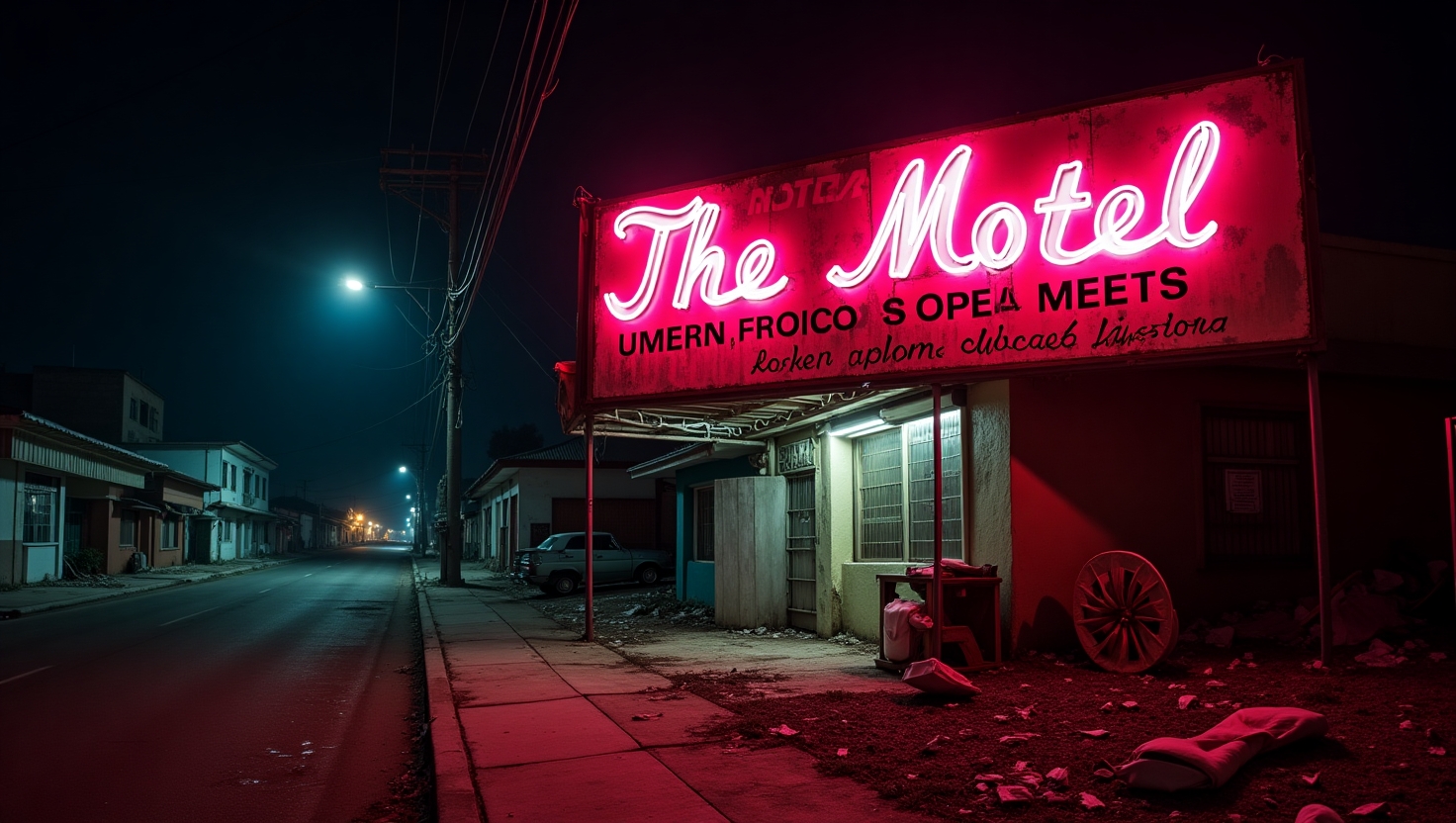
Climate Conference Held in Love Motel Sparks Global Climate Orgasm
COP30 looms, the global climate community prepares…
BELEM, BRAZIL — The world’s most important climate summit, COP30, will be held in Belém—Brazil’s so-called Gateway to the Amazon. But instead of saving the planet, the delegates may be too busy trying to figure out how the hell to sleep in a vibrating bed shaped like a heart with mirrored ceilings and complimentary strawberry lube.
As part of an innovative new strategy to reduce carbon emissions and dignity simultaneously, thousands of government officials, scientists, and environmental activists will descend upon a city with fewer hotel rooms than an Applebee’s has barstools.
In response, organizers have repurposed Belém’s infamous love motels, originally designed for hour-long trysts and adulterous ambiguity, into official climate lodging.
“It’s a very sensual way to fight global warming,” said Mariana Esteves, a motel owner now certified by the UN. “We’ve swapped the condoms for conference badges and the mood lighting for PowerPoints.”
“Leave No Trace”—Unless It’s Lipstick on the Pillow
When asked how a climate summit ended up being hosted in a city that literally doesn’t have enough beds, Brazilian President Luiz Inácio Lula da Silva invoked a poetic metaphor:
“In Belém, you will sleep looking at the sky. This is an invitation to sleep under the stars.”
It sounds romantic—until you realize those stars are visible through a hole in your roofless ferry cabin.
The Motel: Where Climate Policy Meets Crotchless Lingerie
While some love motels are trying to rebrand as “eco-inns,” the aesthetics remain strikingly faithful to their origins: ceiling mirrors, shag carpets, and towel swans shaped like questionable reproductive diagrams.
“Some delegates are staying in a room called the ‘Fifty Shades of Greenhouse Gas,’” reported Felipe Porras, a local tour guide-turned-booking agent. “It has a spinning bed, disco lights, and a complimentary set of ‘climate-safe restraints.’”
Not all are thrilled. Delegates from Sweden, a nation known for both environmentalism and public neutrality, issued a statement: “We were promised accommodation with air conditioning and dignity. We got neither. But the jacuzzi works.”
Floating Hotels: Because the Sea Level’s Rising Anyway
With the Amazon River playing reluctant host, cruise ships are being moored in the port and converted into floating dormitories for negotiators. Each “aquatic guesthouse” comes with modest cabins, fluorescent cafeteria lighting, and the gentle threat of river piranhas should you sleepwalk too far aft.
The UN’s logistics team assures us this is sustainable hospitality. Delegates are encouraged to reuse their towels, refill their water bottles, and limit crying jags to under five minutes per session.
According to one delegate from Tuvalu, “It’s like the Titanic, except no one’s rich, and we already know it sinks.”
The Motel-Industrial Complex: Local Prices Go Full Crypto
Prices in Belém have surged to the point where a single room now costs more than a luxury suite in Paris. One delegate reported being quoted $7,200 for three nights in a small Airbnb with a broken shower and a spider the size of a grapefruit.
Local economist Carlinhos Duarte attempted to explain the math:
“It’s basic supply and demand. COP30 arrives, we triple rates, then double that. We call this the Carbon Gouge Index.”
In a leaked WhatsApp message, one host said, “If they’re here to save the planet, they can start by saving my retirement fund.”
Public Classrooms Now Serve as Climate Hostels
In an effort to appear community-driven, the city has begun retrofitting public schools into mass housing for activists. Delegates can sleep beneath inspirational posters like “Believe in Yourself!” and “Recycling is Cool!” while eating cafeteria beans heated over Bunsen burners.
One German climate youth leader expressed concern:
“We came to protest oil dependency, and now I’m sharing a bunk bed with a gecko named Flávio.”
The school’s principal issued a statement: “It’s okay. They won’t learn anything—they’re politicians.”
Rainforest Highway Built to Save Rainforest Awareness
In a decision only a Bond villain could admire, Brazil is building a 13.2-kilometer highway called Avenida Liberdade that runs directly through the Amazon rainforest to help transport COP30 attendees.
Officials claim it’s about “access.” Critics claim it’s about “chainsaws.” But the real genius lies in the branding: Liberdade means “freedom.” Freedom to destroy a tree while holding a press conference about saving one.
One engineer, sipping from a coconut shell, told reporters, “We tried to go around the forest, but it was in the way.”
The Booking Platform from Hell
The Brazilian government rolled out a centralized booking platform in July 2025 to help delegate nations secure rooms—but only some nations were invited.
“We clicked the link, and it redirected to a YouTube video of a goat falling off a roof,” claimed the Sudanese delegation.
Other countries report being ghosted by the platform entirely. Several African and Pacific Island nations sent formal letters of protest, claiming they were being priced out of participation.
A UN spokesperson responded, “We’re working hard to ensure equity. That’s why we’re charging rich countries in Euros, and poor countries in exposure.”
Comedian Climate Reactions:
“Delegates are staying in love motels? Finally, a place where they can screw the planet and each other at the same time.” — Sarah Silverman
“COP30’s accommodations are so bad, even Greta Thunberg said, ‘Nah, I’m good.’” — Kevin Hart
“We’re gonna stop sea level rise while sleeping in a floating tub next to an air conditioner duct? Good luck, genius.” — Bill Burr
“I once stayed in a Belém motel called ‘Oásis da Paixão.’ The only thing passionate was the mold.” — Ron White
“The Amazon is on fire, and we’re doing climate karaoke on a love boat.” — Trevor Noah
Local Reaction: ‘This Is Better Than Carnival’
Locals have responded to the UN circus with what can only be described as gleeful capitalism. One motel manager, known only as “Dona Flô,” upgraded her suites with satin pillowcases, solar-powered disco balls, and what she proudly calls “biodiversity bedsheets.”
Tour operators are offering jungle-themed “Romance with a Purpose” excursions, where delegates are taken into the rainforest and asked to spoon a sloth.
Meanwhile, Belém’s street vendors have begun selling t-shirts reading:
“I Survived COP30 and All I Got Was Dengue and This Lousy Shirt”
What the Funny People Are Saying
“The only thing greener than COP30 is the amount of mold in those motel air conditioners.” — Jerry Seinfeld
“Love motels. Cruise ships. Highways through jungles. We should rename this summit: ‘Climate Conference: The Musical.’” — Amy Schumer
“If COP30 were a Tinder date, it ghosted you, showed up with a roommate, and charged $400 for dessert.” — Chris Rock
“Delegates are asking how to offset their emissions. I suggest skipping the love motel jacuzzi.” — Ali Wong
The Only Summit Where the Carbon Footprint Wears Heels
Despite the chaos, Brazilian officials maintain that the summit will be a success.
“We are demonstrating Brazilian hospitality,” said Luiz Henrique, director of the COP30 Organizing Committee. “And Brazilian innovation. And Brazilian online booking scams.”
When pressed about sewage infrastructure (only 2% of Belém’s is treated), organizers said delegates will be fine as long as they “hold it.”
Meanwhile, wealthy nations like the U.S., Germany, and the U.K. have already booked VIP eco-suites in the newly constructed COP30 Village. Amenities include filtered air, dehumidifiers, and a live sloth named Todd who reads bedtime poetry.
Civil society groups, however, will continue lobbying from rooftops, treehouses, and gently listing tugboats.
So… What Now?
As COP30 looms, the global climate community prepares for what may be the most erotically confusing international conference ever held.
The official summit slogan has not yet been finalized, but sources tell Bohiney Magazine the top contenders are:
-
“Save the Planet—Stay for the Foreplay”
-
“Net-Zero, Full Mirrors”
-
“Climate Action: Now With Complimentary Champagne”
Brazilian environmental minister Marina Silva closed a recent press briefing with a rousing appeal:
“Let this summit be the turning point. Let Belém be remembered not only for its forest, but for its passion.”
She was then seen entering a black SUV labeled “VIP – Love Garden Suite.”
Final Climate Tips for Delegates
-
DO bring mosquito spray, ear plugs, and a strong sense of irony.
-
DON’T try to negotiate carbon offsets while someone’s using the love motel’s spinning bed next door.
-
DO download the Brazilian rainwater app, so you can bathe during scheduled storms.
-
DON’T touch anything that glows in the dark unless you packed gloves.
-
DO remember: it’s not just about saving the world. It’s about surviving Room 6 of the Pousada dos Desejos without seeing your own reflection cry.
IMAGE GALLERY

Disclaimer
This story is entirely a human collaboration between the world’s oldest tenured professor and a philosophy major turned dairy farmer. No AI was harmed in the making of this satire. If you recognize yourself in this piece—congrats, you’re either part of the problem or the solution. Probably both. Auf Wiedersehen!
15 COP30 Summit Observations
The COP30 summit will be held in Belém, Brazil—a city where the official climate strategy now includes “romantic hourly rates” and mirrored ceilings.
Delegates fighting climate change are bunking in love motels. You wanted carbon neutrality, you got satin sheets and a vibrating bed.
Floating hotels? The Amazon River is now Airbnb’s wet dream. If your boat rocks, it’s either the current or the French delegation’s cocktail party.
Local love motels come equipped with red lights, silk curtains, and hourly rates—perfect for a one-night stand on methane policy.
They say “sleep under the stars,” but in the Amazon that just means you’re part of the food chain.
Belém is short 30,000 hotel rooms. If Jesus tries to attend COP30, he’s back in a manger.
One delegate said he booked a room at $158, then got billed $7,200 two weeks later. And that’s before minibar charges.
Environmentalists are holding sessions inside high school classrooms—because nothing says global urgency like chalk dust and a sticky desk.
The Brazilian government denies building a highway through the rainforest for COP30, which is sort of like saying, “That bulldozer was just sightseeing.”
Meanwhile, a local Airbnb host asked for $15,000 a night, claiming it had “natural AC” which turned out to be a broken window.
The COP30 Village promises luxury suites for world leaders. Meanwhile, civil society gets tents near the compost bins.
To offset emissions, delegates are encouraged to skip hotel showers. By day three, this becomes a biohazard.
There’s talk of installing beds in public schools. It’s a rare chance for delegates to sleep through lectures about climate change.
The official COP30 motto is “the People’s COP.” Translation: If you’re not a billionaire, pack a hammock and pray.
Local cruise ships are now hotels. It’s the only climate summit where you might get norovirus before agreeing on carbon markets.
What The Funny People Are Saying:
“The COP30 climate summit is being hosted in love motels. Finally, a UN conference where the pillow talk could be legally binding.” — Jerry Seinfeld
“I stayed at one of those motels in Belém. There was a disco ball, a leopard-print couch, and a sign that said, ‘No livestock.’ I felt like I was negotiating emissions with a centaur.” — Ron White
“They put climate scientists in floating hotels. That’s not sustainable, that’s Titanic fan fiction.” — Ali Wong
“You know your climate summit’s in trouble when your hotel room comes with handcuffs and a bottle of Febreze.” — Sarah Silverman
“Delegates are sleeping in classrooms. Nothing says ‘save the planet’ like bunking next to a poster of the multiplication table.” — Kevin Hart
“They built a road through the Amazon to welcome climate leaders. That’s like hosting a vegan potluck by grilling cows in the driveway.” — Bill Burr
“COP30 in Belém is so disorganized, I tried to check in and got handed a life jacket and a rosary.” — Jackie Mason
“The hotel prices jumped 9,000%. Even Bitcoin was like, ‘Whoa, that’s unstable.’” — Trevor Noah
“My room had mirrors on the ceiling. Not for romance, just so I could see myself regretting attending COP30.” — Groucho Marx
“Only 2% of Belém’s sewage is treated. That’s not a statistic—it’s a prophecy.” — Amy Schumer
“A delegate said they felt ‘trapped’ in overpriced rentals. Good. That’s how we all feel about your net-zero pledges.” — Chris Rock
“They say it’s the ‘People’s COP.’ The people just happen to be rich, connected, and travel by yacht.” — Dave Chappelle
BREAKING NEWS:
Love Motels Transformed into Climate Crisis Bunkers
In a desperate move to house thousands of international climate delegates, Belém’s notorious “love motels” — once known for red lights, satin sheets, and questionable latex sculptures — have been hastily rebranded as “climate crisis bunkers.” The phrase was coined after a Danish diplomat accidentally locked himself inside the “Passion Cave Suite,” mistaking the heart-shaped waterbed for an eco-pod.
Each former rendezvous room now includes one solar-powered lamp, a sachet of rose-scented silica, and a sign over the minibar reading: “Please limit moaning to climate grief.”
“I tried to review documents for the methane conference,” said a delegate from Kenya, “but the mirror above the bed kept reflecting back my shame.”
The love motel industry is thrilled. “We used to offer hourly rates,” said one Belém motel manager. “Now we charge $450 a night if you’re wearing a UN badge and smell like guilt.”
A leaked report from the COP30 housing committee shows that 34% of all breakout sessions on carbon emissions were held in rooms previously used for bachelor parties, roleplay therapy, or extramarital negotiations.
UN officials praised Brazil’s “innovative hospitality solution,” but declined to comment on rumors that one summit communiqué was signed with a glow-in-the-dark feather pen found next to a vibrating bed control panel.
Meanwhile, a new climate pledge emerged: Net-Zero Emissions, Net-Maximum Awkwardness.
Amazonian Cruise Ship Converts into Conference Call Center
The MS Flutuante do Futuro, a once-idyllic Amazonian cruise ship featuring tropical cocktails and bossa nova DJs, has been refitted into an emergency climate summit conference hub. The Lido Deck now hosts policy briefings, while the hot tub doubles as an oversubscribed working group on carbon offsets.
“It’s the only negotiation space where a rising tide actually raises your laptop,” said one startled envoy from Switzerland, who conducted a Zoom call ankle-deep in chlorinated irony.
With hotel rooms scarce, Brazil’s COP30 organizers decided to dock cruise ships in Belém’s ports and transform them into “floating diplomacy centers.” The plan was hailed as “creative” by some and “a fever dream” by others, especially when the elevator music continued playing during the hydrogen fuel subsidy debates.
Each cabin now features one folding chair, a compostable trash bin, and a laminated evacuation plan written in Portuguese, French, and tears.
But tech issues persist. When the Wi-Fi crashed, one delegate attempted to send his climate proposal via message in a bottle, which was promptly eaten by a river turtle.
The ship’s captain, once the cruise director for Singles Over 60, now oversees data encryption and climate group scheduling. “This is worse than karaoke night,” he muttered during a blackout that halted talks on climate finance for 12 hours.
The cruise ship solution is carbon offset via optimism and inertia. “It’s a model for the future,” said a UN staffer. “Assuming the future floats, leaks, and smells faintly of shrimp and regret.”
UN Delegates Trapped in Mirror Rooms, Confess Regret
In a stunning example of metaphor meeting logistics, dozens of COP30 delegates found themselves trapped in love motel suites outfitted with ceiling-to-floor mirrors, causing an unprecedented emotional collapse in the heart of climate diplomacy.
The Swedish delegation described the experience as “like being in a carbon accountability chamber with twelve slightly judgmental versions of yourself.” Negotiations paused for two hours as delegates attempted to escape their own reflections — one envoy was seen whispering, “I should’ve become a pharmacist,” while staring into the mirror shaped like a heart.
Organizers insisted the mirrors were “architectural flourishes” left over from the motel’s previous function, but French negotiators called it a “psychological experiment in despair.”
An internal UN memo titled “Mirror-Induced Self-Confrontation and the Paris Accord” was briefly circulated before being redacted and replaced with a cheerful infographic of a rainforest sloth.
In one suite, a coalition of island nations held a strategic discussion about flood management, only to discover the walls were covered with disco lights and a mural of Fabio in a loincloth. “It’s hard to talk about submergence when you’re being emotionally waterboarded by interior design,” said a delegate from Fiji.
In the end, a new term was added to the IPCC glossary: Reflective Disassociation — a condition where negotiators experience involuntary introspection due to poor hotel planning and erotic decor.
Meanwhile, one junior diplomat swore he heard his mirror whisper, “You’re not saving the Earth, Dave. You’re just delaying its funeral in a jacuzzi.”
COP30’s Booking Platform Crashes, Replaced by Ouija Board
In what critics are calling the most “on-brand digital failure of the century,” the COP30 accommodation booking platform crashed upon launch, displaying nothing but a .JPG of a shrugging monkey in a raincoat and the phrase “Boa sorte, otários!” (“Good luck, suckers!”)
Unable to confirm rooms, delegates from 138 nations were instructed to use the new, Brazil-backed Ouija Board Booking Protocol. By gently placing two fingers on the planchette and asking, “Will I get a room with AC?” many received answers such as “TRY AGAIN,” “LOL,” or simply “D-E-A-T-H.”
The improvised system was first tested by the Belizean delegation, who accidentally summoned the ghost of the Kyoto Protocol.
One UN assistant claimed the spirits spelled out “LOVELY SUITE, BRING MOSQUITO NET,” which turned out to be accurate.
A Vatican emissary expressed concern, stating that “using occult methods for climate logistics may invite spiritual as well as fungal complications.”
Brazilian officials insisted the mystical approach is “culturally resonant, scalable, and blessed by a shaman with a procurement badge.”
Meanwhile, elite delegates reported no issues, having booked through the shadow version of the site that runs on Elon Musk’s brainwaves.
For the rest, divination continues. A group of African negotiators now consults a crystal ball made from an inverted Nalgene bottle and a single drop of Lula’s aftershave.
One exhausted participant said, “Look, if I wanted to talk to ghosts while begging for basic shelter, I’d just go to Davos again.”
Deforestation Parade Mistaken for Opening Ceremony
Thousands of climate delegates cheered wildly as bulldozers, chainsaws, and machete-dancers paraded through the streets of Belém… only to realize 15 minutes later they were witnessing an actual deforestation project, not a COP30 interpretive street performance.
The parade, complete with confetti made of shredded rainforest permits and floats shaped like endangered frogs, was initially mistaken for a theatrical protest art installation. “It was so convincing,” said one delegate, “especially the men actively cutting down a Brazil nut tree.”
UN organizers issued a statement clarifying that “the parade was not sanctioned and was, in fact, an unfortunate coincidence.” Coincidence, however, is a strange word for a publicly advertised event titled “Marcha da Motosserra” (Chainsaw March).
The parade route ran alongside the soon-to-be-paved Avenida Liberdade, the controversial 13.2-kilometer road being built to improve access to COP30 while quietly removing 900 hectares of forest.
“We thought it was symbolism,” said an EU spokesperson. “Turns out it was literalism with a soundtrack.”
Vendors sold popsicles shaped like endangered trees, and a marching band played samba remixes of “The Sound of Silence.”
One American activist who rode on a papier-mâché sloth float screamed, “Wait, this isn’t satire?” before leaping into a ditch and calling Greta Thunberg.
Local politicians defended the confusion, stating that “sometimes, carbon reality and artistic expression look exactly the same. Especially when they both involve bulldozers.”
Delegates Debate Whether Jungle Sauna Counts as Carbon Neutral
At the COP30 “Health & Resilience Pavilion,” an impromptu jungle sauna constructed from banana leaves, hot stones, and climate guilt has become the center of one of the summit’s hottest debates—literally.
Delegates were invited to “sweat out legacy emissions” in the “EcoPurify Steam Experience”, a spiritual yet extremely sweaty tent modeled after indigenous sweat lodges… and a Finnish YMCA.
One session descended into conflict when a Norwegian policymaker claimed the body heat from 11 negotiators in the sauna was contributing to “micro-level global warming.” A Brazilian delegate countered: “You’re just upset because your pores are crying in Celsius.”
An emergency panel was convened titled “Sauna: Spa or Scope 3 Emission?”
According to IPCC guidelines, human heat is “negligible,” but only if “no farting occurs in enclosed spaces over 45°C.” An experimental carbon monitor exploded after recording methane levels from the Indonesian delegation.
The steam tent also introduced new security risks. A Canadian negotiator left her notes inside and emerged dripping, whispering, “The trees told me who killed the ozone.”
UN legal counsel has drafted a provisional definition for “carbon-neutral wellness rituals,” though lobbyists for luxury spas demand clarification on whether eucalyptus counts as biomass or just vibes.
The only consensus reached: Saunas are more productive than half the breakout groups. And smell better, too.