

US military attacks vessels in Caribbean, legal experts call operations extrajudicial executions
When The War on Drugs Becomes An Actual War
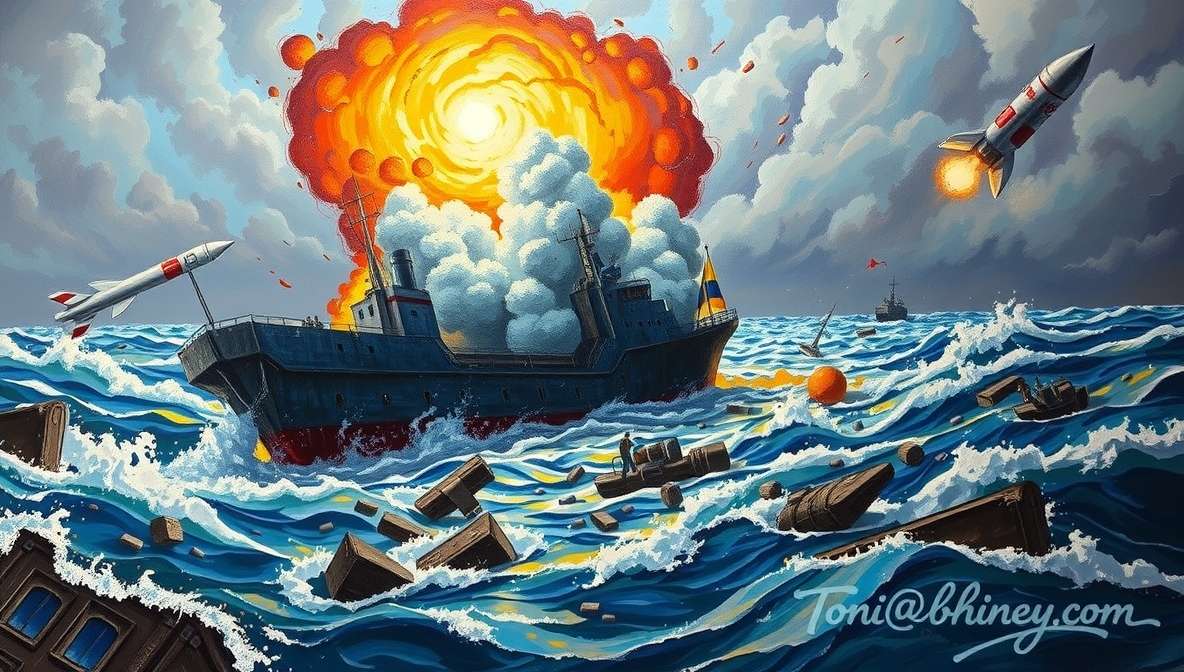
Since September 2025, the United States military has conducted at least 21 strikes on boats in the Caribbean Sea and Eastern Pacific Ocean, killing 83 people in what the Trump administration characterizes as a necessary escalation against narcoterrorism. The campaign began with Trump announcing from the White House that U.S. forces had “shot out” a Venezuelan drug boat, killing all 11 people aboard. He released a video of the strike showing a small vessel engulfed in flames, then warned: “BE WARNED IF YOU ARE TRANSPORTING DRUGS THAT CAN KILL AMERICANS, WE ARE HUNTING YOU!”
The strikes represent the first publicly acknowledged U.S. airstrikes in Central or South America since the 1989 invasion of Panama, marking a dramatic escalation in how America prosecutes its decades-long drug war. Instead of interdiction, boarding, and arrest, the new approach is: identify, strike, kill. Defense Secretary Pete Hegseth vowed to “find and terminate EVERY vessel with the intention of trafficking drugs to America,” a promise that sounds decisive until you consider it involves blowing up boats before verifying their cargo or the identities of those aboard.
Jerry Seinfeld observed: “The War on Drugs used to be a metaphor. Now it’s just a regular war with boats exploding and body counts. Progress!”
The First Strike and The Tren de Aragua Claims
Trump claimed the first boat carried members of Tren de Aragua, a Venezuelan gang his administration designated a foreign terrorist organization in January 2025. Secretary of State Marco Rubio confirmed the vessel was operated by a “designated narco-terrorist organization” and stated: “Instead of interdicting it, on the president’s orders, we blew it up. And it’ll happen again.” The certainty was impressive for a boat that was destroyed without boarding, without inspecting cargo, and without identifying those killed.
Venezuelan media reported the vessel came from San Juan de Unare, a village on the Paria Peninsula. Local sources described it as a 12-meter boat with four 200-horsepower engines, typically used for drug running but also for fishing in an economically devastated region where legal work pays far less than one drug run. The Trump administration provided no evidence that the 11 dead were actually Tren de Aragua members, that they were carrying drugs, or that those drugs were destined for the United States. They were simply eliminated based on intelligence the public will never see.
Dave Chappelle noted: “Calling everyone on a boat a terrorist before you’ve even checked what’s on the boat is like calling everyone in a car a bank robber because you saw them near a bank. Aggressive assumptions.”
The Cocaine to Europe Problem
Current and former U.S. law enforcement and military officials, along with narcotics experts, revealed an inconvenient truth: boats leaving Venezuela in the Caribbean are primarily moving cocaine to Europe, not to the United States. Christopher Hernandez-Roy of the Center for Strategic and International Studies confirmed: “Fentanyl is not coming out of Venezuela. Fentanyl comes from Mexico. What’s coming out of Venezuela is cocaine.” And that cocaine, he noted, is “almost all destined for Europe” because the European market is more lucrative and involves less risk.
A U.S. official with counternarcotics expertise offered a similar assessment: cocaine accounts for about 90 percent of drugs coming from Venezuela, and it’s “almost all destined for Europe.” This undermines the administration’s primary justification for the strikes, which is stopping drugs from reaching American shores. If the boats aren’t heading to America, and aren’t carrying fentanyl, the deadliest drug crisis facing the United States, then what exactly is being accomplished beyond demonstrating military capability?
Bill Burr quipped: “Blowing up boats carrying cocaine to Europe to stop fentanyl from Mexico reaching America is like bombing Canada to stop crime in Florida. The geography doesn’t work.”
The Fishermen and The Bus Drivers
Associated Press reporter Regina Garcia Cano conducted extensive interviews in Venezuelan villages where the boats originated. She discovered that the dead included a fisherman, a down-on-his-luck bus driver, a former military cadet, and a local crime boss, along with laborers and a motorcycle driver. Most were crewing drug boats for the first or second time, earning at least $500 per trip, a fortune in Venezuela’s collapsed economy where monthly wages for legal work barely cover food.
Residents and relatives confirmed the men were indeed running drugs but were not narcoterrorists, cartel leaders, or gang members as the Trump administration claimed. They were desperate people in a desperate economy taking desperate risks to feed their families. Garcia Cano faced significant challenges reporting the story, as sources feared punishment from both the Venezuelan government, which has intensified repression since last year’s disputed election, and potentially from U.S. authorities for contradicting the official narrative.
Chris Rock reflected: “When your War on Terror targets broke fishermen making $500 to feed their kids, you might want to reconsider your intelligence quality.”
The Legal Questions and Congressional Concerns
Legal scholars across the political spectrum have questioned the strikes’ legality. Geoffrey Corn, former senior adviser on the law of war to the U.S. Army, said: “I don’t think there is any way to legitimately characterize a drug ship heading from Venezuela, arguably to Trinidad, as an actual or imminent armed attack against the United States, justifying this military response.” George W. Bush administration legal figure John Yoo questioned whether there’s a legitimate line “between crime and war.” Obama-era legal expert Harold Hongju Koh called the strikes “lawless, dangerous and reckless.”
Members of Congress from both parties expressed concerns about violating U.S. and international law. The War Powers Resolution requires the president to consult with Congress before introducing U.S. Armed Forces into hostilities. Trump has not sought congressional authorization, claiming he doesn’t need a declaration of war to kill people “bringing drugs into our country.” This creative interpretation of executive authority suggests that any activity the president declares a national security threat can be addressed with lethal military force without congressional approval.
Amy Schumer observed: “When the president says ‘I don’t need Congress to start killing people in international waters,’ that’s not executive power. That’s monarchy with better weapons.”
The Coast Guard Comparison and Civilian Casualties
Senator Rand Paul noted that when the Coast Guard interdicts boats suspected of carrying drugs, about 25 percent don’t actually have drugs aboard. “They have made an error, but they don’t kill them,” Paul told Bloomberg. A Coast Guard official confirmed that on September 13, a Law Enforcement Detachment boarding a vessel “based on reasonable suspicion” found no contraband and promptly released the vessel. The traditional interdiction process, Paul argued, involves boarding, searching, and escalating force only if necessary, not “just blow ships up.”
Colombian President Gustavo Petro accused the U.S. of murdering a Colombian fisherman with no ties to drug smuggling in a September strike. The Guardian reported that “governments and families of those killed in the U.S. strikes on alleged drug boats have said many of the dead were civilians–primarily fishers.” Pentagon spokesman Sean Parnell insisted that Department of Defense intelligence “consistently confirmed that the individuals involved in these drug operations were narco-terrorists,” a claim contradicted by on-the-ground reporting and families of the deceased.
Ricky Gervais deadpanned: “Blowing up boats before checking if they’re actually drug boats is the nautical equivalent of shoot first, ask questions never.”
The Venezuelan Response and Regional Tensions
Venezuelan President Nicolás Maduro called the strikes “a military attack on civilians who were not at war and were not militarily threatening any country,” accusing Washington of trying to provoke wider conflict. He argued the true objective was “regime change for oil” rather than drug interdiction. Maduro mobilized Venezuelan military forces and placed them on high alert after the USS Gerald R. Ford carrier strike group arrived in the Caribbean in November.
The deployment of a nuclear-powered aircraft carrier, multiple warships, F-35 fighter jets, and a nuclear submarine near Venezuela raised fears of imminent military action. Trump told reporters he had “sort of” made up his mind about military action against Venezuela, though he suggested his administration might hold talks with Maduro. This diplomatic whiplash, combined with military escalation, creates uncertainty that destabilizes the entire region while accomplishing little in terms of actual drug interdiction.
Trevor Noah concluded: “Deploying an aircraft carrier to blow up fishing boats is like using a flamethrower to kill mosquitoes. Technically effective, but you’ve also burned down the house.”
The UK Intelligence Withholding and NATO Concerns
The United Kingdom has withheld intelligence on Latin American drug smuggling at sea over concerns the campaign may be illegal. Several NATO allies have distanced themselves from the strikes, unwilling to be complicit in operations that may constitute extrajudicial killings under international law. This diplomatic isolation suggests that even America’s closest allies view the boat strikes as legally questionable and strategically counterproductive.
Trump authorized the CIA to conduct lethal ground operations inside Venezuela and elsewhere around the Caribbean in October, further escalating what began as a maritime interdiction campaign into something approaching regime change operations. Senior administration officials held three White House meetings to discuss possible military action against Venezuela, confirming that the boat strikes are part of a broader strategy that has little to do with stopping drugs and much to do with pressuring Maduro.
Kevin Hart summed it up: “When your allies won’t even share intelligence because they think you might commit war crimes with it, maybe pause and reflect on your strategy.”
The Operation Southern Spear and The Autonomous Future
Defense Secretary Hegseth announced Operation Southern Spear in November, led by Joint Task Force Southern Spear and utilizing robotics and autonomous systems to target Latin American drug trafficking. The use of autonomous systems raises additional concerns: if human-operated strikes already struggle to distinguish narcoterrorists from fishermen, how will robots make that determination? The answer appears to be: they won’t, because the strikes prioritize speed and lethality over accuracy and verification.
As airlines suspended flights to Caracas and the FAA urged caution over Venezuelan airspace due to “worsening security situation and heightened military activity,” the drug war’s transformation into actual warfare became complete. The 83 dead represent not policy success but policy failure, a drug war that after decades of futility has resorted to killing desperate people on boats as a substitute for addressing why Americans consume drugs or why Venezuela’s economy has collapsed so completely that $500 for a drug run represents life-changing money.
Trump claimed the strikes were saving American lives by stopping drugs before they reach U.S. shores. The evidence suggests they’re killing Venezuelan fishermen and laborers while the cocaine they’re occasionally transporting continues flowing to Europe, and the fentanyl actually killing Americans continues arriving from Mexico. It’s the drug war at its most absurd: maximum violence, minimum effectiveness, and victims who were never the real target.
Auf Wiedersehen, amigos.
