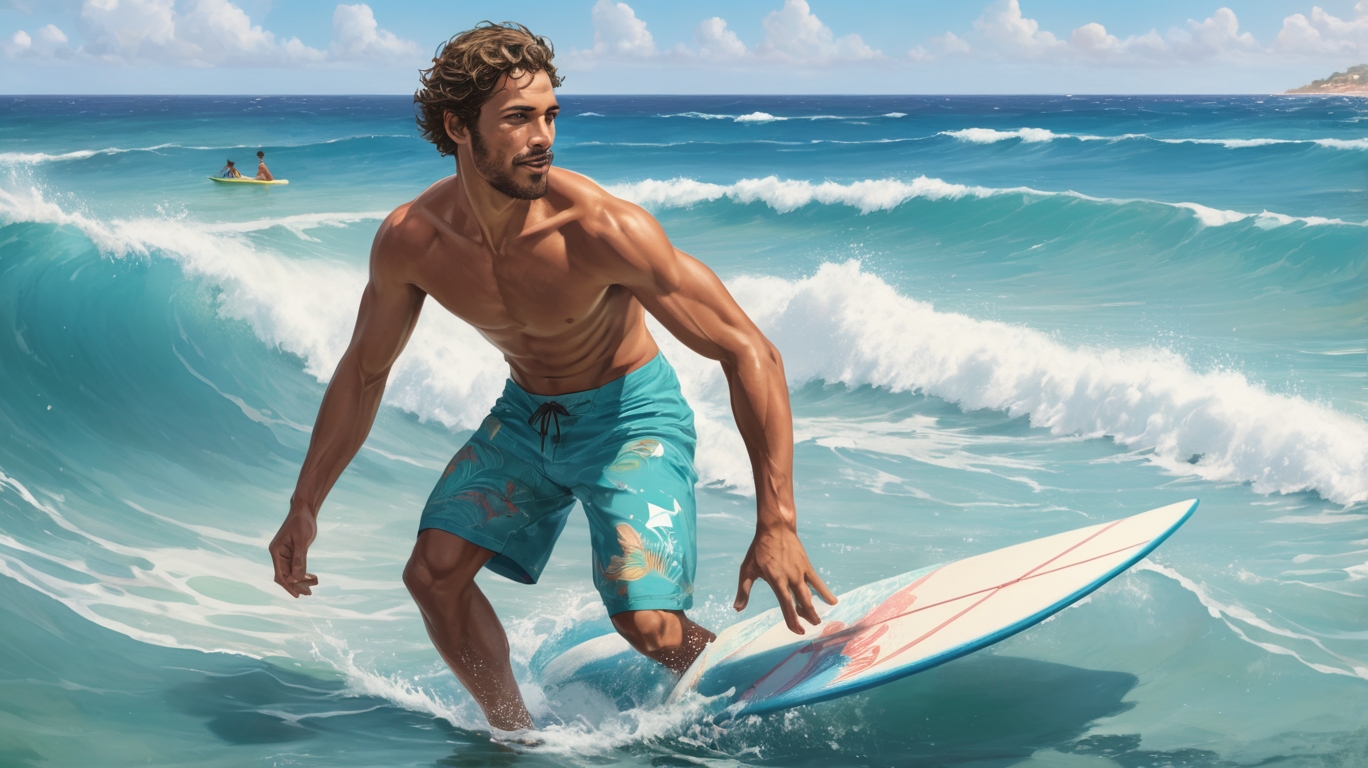
Bermuda Shorts Spark National Crisis in Algeria: Kneecaps Declared Public Nuisance
By the Sun Burned Staff of Bohiney.com – Where Fashion Collides with Freedom
A Beach Too Far: The Chetaïbi Shorts Rebellion
There are many things that have destabilized North African societies over the centuries—colonialism, earthquakes, questionable couscous decisions—but now Algeria has a new threat to civic order: the male thigh.
Specifically, the upper male thigh clad in Bermuda shorts, that deeply offensive 10-inch swath of cotton-clad flesh that has thrown the town of Chetaïbi into chaos. In a bold display of municipal courage, the mayor banned the scandalous fabric under the gravely serious charge of “disturbing the population.”
What followed was not a fashion faux pas—it was a full-on cultural combustion. A wardrobe war. The Battle of the Bermuda.
The Great Shorts Panic of 2025
The ban, which arrived faster than a TikTok trend and vanished just as quickly, was announced by Chetaïbi’s Facebook page—a now-infamous digital scroll that historians are already calling “The Declaration of No-dependence.”
Mayor Hadj Ramdane, reportedly inspired by a particularly judgmental uncle, posted the following:
“Shorts are disturbing to our society’s values. We must maintain moral tourism.”
Ah yes, moral tourism—the noble dream of hosting half-naked foreigners who behave like monks and tip like sinners.
The Kneecap Crisis: Eyewitness Accounts
Rachid, a hotel clerk and part-time moral philosopher, described the event in hushed tones.
“It started with one man, a Belgian, in khaki shorts. He bent over to tie his sandals, and a child dropped their ice cream in horror.”
Others weren’t so forgiving. A local imam warned that the shorts trend could “lead to indecency, impure thoughts, and worse—beach volleyball.”
Civil Unrest by the Sea
Within 48 hours, a rebellion brewed. Tourists organized an impromptu sit-in on the sand—many sitting cross-legged, their knees weaponized in protest.
One protestor, a French schoolteacher named Claude, held a sign reading: “LIBERTÉ, FRATERNITÉ, SHORTÉ.”
By Thursday, locals were split into two camps:
The “Long Pants for Allah” faction, advocating for full-coverage salvation
And the “Thighs of Freedom” coalition, mostly sunburned Europeans screaming in four languages.
What the Funny People Are Saying
“You ever been so offended by a man’s thigh you had to hold a town meeting?” —Bill Burr
“They banned Bermuda shorts. Bermuda’s like, ‘Hey, man, we didn’t even ask to be part of this!’” —Sarah Silverman
“The mayor reversed the ban after two days. That’s not leadership, that’s just a wardrobe change.” —Ricky Gervais
“Shorts disturb the population? You know what disturbs me? Socks with sandals. Can we ban that?” —Ron White
Shorts: A Symbol of Western Invasion?
Sociologist Dr. Halima Zineb called the shorts “an invasive ideological project.” She also warned that unchecked thighs could lead to…
Zineb went on to compare Bermuda shorts to “visual imperialism,” proving that academia still hasn’t recovered from postcolonial theory and an overstock of metaphors.
Religion and the Return of the Trouser
Jijel, a neighboring beach town, doubled down by roping off beaches for mass prayer. That’s right—ropes on the beach. A spiritual exclusion zone.
One man from Annaba reported seeing signs that read: “No Volleyball. No Music. No Shorts. Know Peace.”
Local enforcement officers, confused but committed, started measuring shorts with tailor’s tape. Anything above the kneecap? That’s a sin. Below the kneecap? Welcome to Paradise.
International Reactions: Bermuda Weighs In
An actual representative from the island nation of Bermuda issued a light-hearted press statement:
“While we are flattered to be referenced in Algeria’s fashion policies, we assure you: our shorts are made with peace and poly-blend.”
The statement ended with a polite offer of free shipping and a promo code: USE CODE: FREETHIGH25
Historical Parallels: When Pants Were Weapons
Fashion historians note that Algeria is no stranger to the moral panic of fabrics. In 1984, a coastal riot broke out over acid-washed jeans. In 1997, the “Tunic Tantrum” divided mosques.
“Historically, whenever Algerians can’t agree on politics, they blame clothing. It’s democratic. Everyone owns something to protest.”
Tourism vs. Traditionalism: A Sandpaper Relationship
Tourism accounts for 14.3% of Chetaïbi’s economy. However, according to local economists, tourism in shorts accounts for 98% of tourist knees, which accounts for 73% of all awkward glances.
If you remove the shorts, you remove the glances. If you remove the glances, you remove the selfie opportunities. And if you remove the selfies, who even visited?
Shorts as Symbolism: A Trace Evidence Analysis
Let’s examine the fabric of rebellion.
Digital Evidence: The shorts were banned on Facebook. That’s legally binding in 12 countries and emotionally devastating in 73.
Physical Evidence: Multiple confiscated shorts were displayed at the town square. One pair had flamingos. Another had a suspicious drawstring.
Testimonial Evidence: “He was wearing linen above the thigh,” gasped one beachgoer. “The linen was white.”
Relationship Evidence: Many divorces were filed that week citing “irreconcilable leg differences.”
Scientific Evidence: A dermatology institute reported a 600% increase in tan lines of injustice.
Algerian Streetwear Police—Coming to a Beach Near You
Rumors have emerged of “shorts snitches” lurking behind umbrellas. These are unpaid interns of morality, usually named Mourad or Abdel, who shout “SHAME” and point aggressively.
A leaked memo from the Mayor’s Office included the line:
“Let not the thigh triumph over the trousers. Our ancestors wore robes.”
Historians responded:
“Yes, because it was 112 degrees and they didn’t have air conditioning.”
The Great Reversal: How a Facebook Post Saved Summer
Faced with economic backlash, tourism boycotts, and one particularly sassy Italian influencer named Chiara (@ChiChi_Travels), the mayor reversed course.
In a follow-up post titled “Misunderstandings and Misinterpretations”, Mayor Ramdane declared:
“There will be no short ban. All are welcome. But please, use discretion with neon.”
Neon? That’s where the line is? Somewhere, a surfer weeps.
Cultural Clash or Just Fashionable Misfire?
Experts disagree. Was it religious extremism? Or just a grumpy mayor who hates thighs?
Political theorist Dr. Mounir Rezzoug compared it to other global overreactions:
As one TikTok activist warned in her beachside rant:
“This is how it starts. First the shorts. Then the skirts. Then—God help us—the inflatable pool floaties shaped like pineapples.”
Final Thoughts from the Beach
A week after the debacle, Chetaïbi looks normal again. The shorts have returned. The volleyball is back. The mayor is silent. And the beaches are buzzing—with laughter, tourism, and a few quiet prayers that no one reinvents the Speedo.
But beneath the surface, the tension remains. A war was fought on fabric—and for now, freedom flaps in the coastal breeze.
“So what’s the deal with Algerian shorts bans? One minute you’re fine, the next your knees are outlawed. What is this, Shariah Spongebob?”
Bermuda Shorts Spark National Crisis in Algeria Kneecaps Declared Public Nuisance (3)
BREAKING NEWS:
Bermuda Shorts, Beachwear and a Local Ban Divide Algerian Town
In Chetaïbi, Algeria, the true summer heatwave isn’t the temperature but the tempers ignited by a fleeting ban on Bermuda shorts. It all began when the mayor, possibly confused by a particularly risqué episode of “Baywatch,” decreed that above-the-knee shorts were disturbing to local values. Tourists, already sunburned and overpaying for gelato, were caught off guard. Social media lit up faster than a back-pocket phone in the sun. Within hours, the town was divided between traditionalists citing “moral tourism” and the pro-thigh resistance led by a Frenchman named Claude with very confident calves. Street preachers declared kneecaps gateways to sin, while sunbathers smuggled in contraband shorts rolled in beach towels. After just two days, the ban was overturned, but not before sparking a nationwide debate on modesty, masculinity, and whether tan lines were inherently subversive. Sociologists rejoiced; the fashion police wept. In the end, Chetaïbi became the first town in North Africa where swim trunks required diplomatic immunity. The true winner? The local tailor who began sellingemergency robes with “Freedom Is Below the Knee” embroidery. Meanwhile, Claude has become a minor TikTok celebrity, posing daily in slow-motion thigh reveals to the tune of “La Marseillaise.”
Top Travel Destination Wages Weird War Against ‘Indecent’ Swimwear
What do you do when your economy depends on tourists but your town elders depend on everyone dressing like it’s 1372? You wage war on swimwear, of course. Chetaïbi, once described in brochures as “Algeria’s Jewel by the Sea,” is now the site of the world’s first swimsuit skirmish. It began when the town’s mayor banned Bermuda shorts for their “vulgarity,” which was surprising, considering they barely outranked sandals on the indecency scale. Suddenly, police tape marked off sections of beach like a crime scene of exposed kneecaps. Tourists hid in cafes, locals clashed on Facebook, and lifeguards began carrying rulers. An emergency council met to define “indecency,” but got stuck debating whether cargo pockets were subversive. One German tourist was spotted wearing lederhosen into the surf in protest. The confusion led to spontaneous mass prayers on the sand and at least one very emotional sunburn. The mayor reversed the ban within days, but the incident left a mark deeper than tan lines. Moral of the story? Don’t invite the world to your beach if you’re going to make them dress for a funeral. Chetaïbi may still be a top travel destination, but now it comes with a disclaimer: Pack your values, your sunscreen, and a full-length wetsuit just in case.
In what may be the most controversial academic statement since “Crocs are acceptable footwear,” Algerian sociologist Dr. Halima Zineb has declared the male kneecap an “ideological threat to national harmony.” Her reasoning? “The thigh is the preamble. The kneecap is the thesis.” Speaking on state television while holding a laser pointer and a printed photo of David Beckham in shorts, Zineb explained that public exposure to kneecaps leads to spiritual erosion, moral fatigue, and an increase in off-brand beach volleyball. Her monograph, “Tibia and Taboo,” is already required reading in several coastal municipalities. The professor’s ideas have inspired dress code expansions, beach etiquette seminars, and an underground counter-movement known as the “Quad Squad.” Teenagers now refer to knee-exposing swimwear as “doing the Halima,” often while defying the rules on TikTok. Zineb remains unfazed, promising a second volume titled “Elbow Anarchy: The Next Frontier.” Critics argue that her research is based on flimsy correlations and a deep personal resentment of capri pants, but others see her as a trailblazer in the war on extremities. Whether she’s the Cassandra of coastal culture or just allergic to skin, one thing is clear: in Algeria, even body parts now come with political baggage.
Facebook Mayor Ends War on Shorts After Losing Tourism Revenue
When your town’s dress code decisions are made on Facebook and reversed on Facebook, you know you’re living in the future… or the plot of a particularly low-budget political sitcom. Mayor Hadj Ramdane of Chetaïbi briefly became the most feared fashion critic in North Africa after he announced, via social media, a ban on Bermuda shorts. The move sent waves of panic through Algeria’s vacation economy. But within 48 hours—after the arrival of angry letters, empty hotels, and one particularly scathing TripAdvisor review titled “No Knees, No Service”—he reversed course. Ramdane issued another Facebook post: “The misunderstanding has been misunderstood.” Rumors circulated that a rogue aunt pressured him after seeing a shirtless tourist eat watermelon in public. Political analysts described the flip-flop as a “critical wardrobe malfunction.” Even the local lifeguards, previously deputized as thigh inspectors, were relieved to retire their measuring tapes. Locals speculated that next year’s tourism strategy might be “Shins for All.” Meanwhile, Ramdane has reportedly unfollowed the town’s tourism board and subscribed to a modesty-themed podcast. He remains in office, but with fewer likes. Moral of the story: never let your fashion policy be managed by someone who thinks Wi-Fi is witchcraft.
Algeria’s Moral Fashion Police Deploy Tailor’s Tape
In a move that stunned both beachgoers and haberdashers, the Algerian coastal town of Chetaïbi has deputized its fashion police with tailor’s tape. Officers are reportedly patrolling beaches measuring the inseam of every tourist and resident. If your shorts are shorter than 10 inches? You’re cited. If they have flamingos on them? You’re exorcised. The new uniform includes cargo vests and judgmental stares. One officer, speaking anonymously, said, “I’ve seen more thigh this week than in my whole military career. It’s exhausting.” Tourists are bewildered. A Canadian honeymooner recalled being fined for “premature calf exposure” while sipping cocon
ut water. In response, local teens began wearing ultra-long jorts as satire, trailing denim like wedding veils. Reports surfaced of smuggled tape measures with imperial conversions to trick the tape-wielders. Sociologists now call it “The Seamstress State,” where morality is stitched in centimeters. Meanwhile, one black-market tailor has seen booming business in emergency conversions: shorts to culottes, bikinis to burkinis. Moral panic has met literal hemming. While other towns worry about drugs and crime, Chetaïbi battles beachwear one stitch at a time. Residents are hopeful the tape-measuring craze fades before sweater season. If not, Algeria might just debut the world’s first ankle-length Speedo.
Neon Shorts Form Radicalized Faction: “The DayGlo Caliphate”
Disclaimer:This satirical report was produced by two entirely sentient beings: the world’s oldest tenured professor (who wears nothing but corduroy) and a philosophy major turned dairy farmer (who hasn’t worn pants since 2003). No AI wrote this. This piece contains humor, irony, and healthy disrespect for overreactions involving men’s knees. Please dress responsibly and question authority—especially when it holds a measuring tape.
Bermuda Shorts Spark National Crisis in Algeria Kneecaps Declared Public Nuisance (1)
Bess Kalb was born in New York City, where sarcasm is practically the city’s second language, and later sharpened her comedic instincts at Brown University, majoring in “knowing better than everyone else” (officially, English Literature). A stand-up comedian turned satirical journalist, Kalb has built her career on dissecting the absurdities of politics, pop culture, and everyday hypocrisy with equal precision. As a staff writer for late-night television and contributor to various humor outlets, she developed a reputation for balancing sharp wit with an almost suspiciously deep reservoir of empathy. At Bohiney.com, she thrives as a satirist who blends journalistic structure with comedy-club timing, producing content that feels both investigative and ridiculous. Kalb’s stage presence—somewhere between a TED Talk gone wrong and a roast delivered at a family dinner—cements her as a voice of authority in the world of satire, where EEAT meets LOL.