

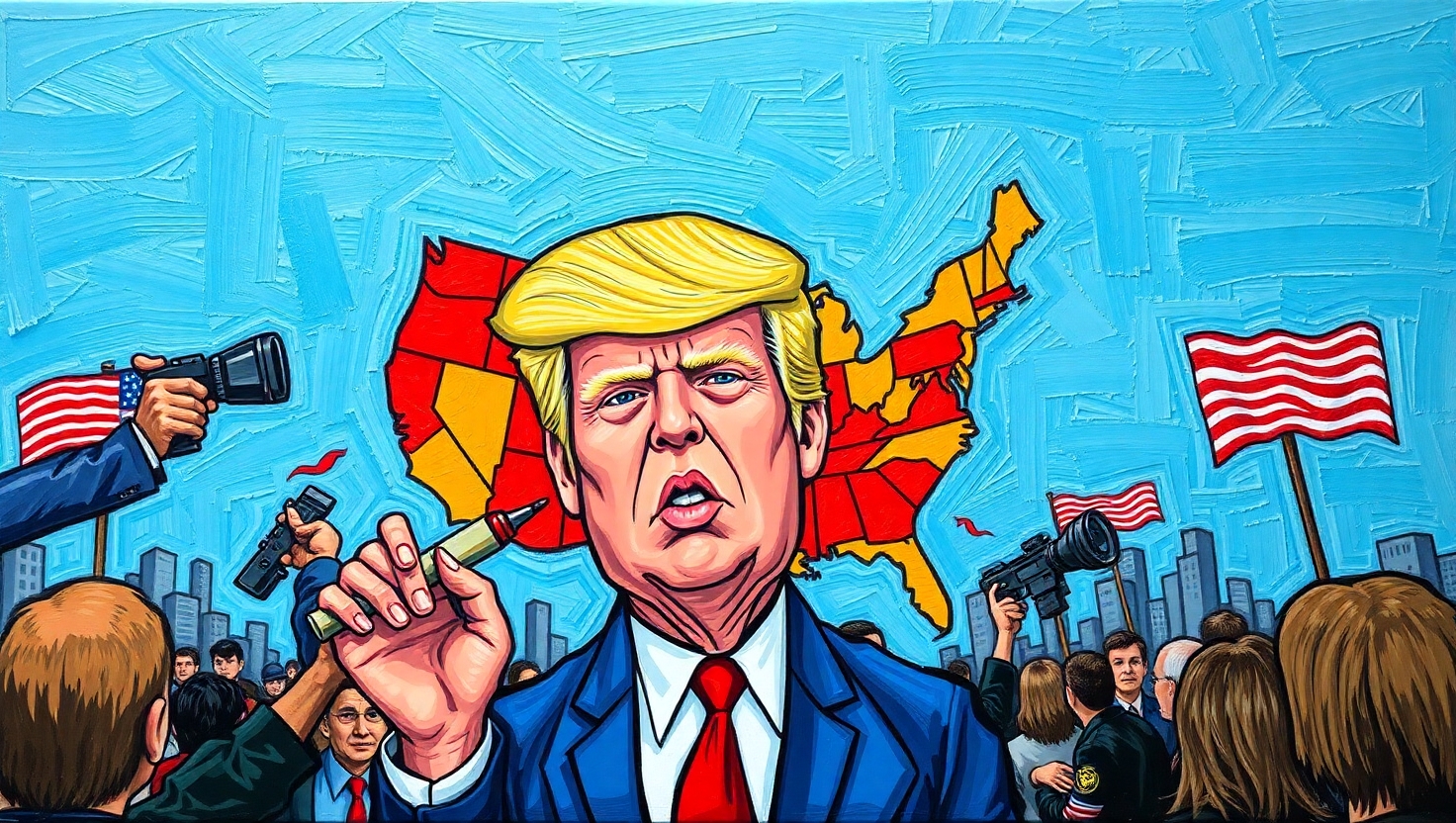
Trump’s Immigration Raids Target Sanctuary Cities, Discovers Most Undocumented Workers Actually Just Republicans Without Voter ID
Mass Deportation Strategy Accidentally Uncovers Nation’s Largest Identity Crisis
CHICAGO, IL — The Trump administration’s ambitious immigration enforcement operation took an unexpected turn this weekend when ICE raids in sanctuary cities revealed that approximately 60% of “undocumented workers” were actually documented Americans who had simply forgotten to bring their wallets. The discovery has prompted what officials are calling “the great identity verification crisis of 2025.”
The raids, designed to demonstrate the administration’s commitment to border security, instead demonstrated America’s commitment to losing important paperwork. What began as targeted enforcement against illegal immigration evolved into an impromptu civics lesson about the importance of carrying identification in a country where everyone looks suspicious to someone.
The operation has created unprecedented confusion in cities like Chicago, where Mexican Independence Day celebrations coincided with immigration sweeps, leading to what one ICE official described as “cultural and bureaucratic chaos with a festive soundtrack.”
The Great Documentation Debacle
The immigration raids revealed a startling truth about American society: most people can’t prove they belong here even when they actually do. The sight of ICE agents demanding documentation from anyone who “looked suspicious” quickly devolved into a citywide game of “Papers, Please” where the main players were American citizens frantically searching their pockets for proof of citizenship.
Dave Chappelle commented on the identification crisis: “So ICE is out here asking everybody for papers, and half the people getting arrested are just Americans who left their driver’s license at home? That’s the most American thing I’ve ever heard. We’re so bad at paperwork we’re accidentally deporting ourselves.”
The raids exposed what sociologists call “documentary privilege” — the assumption that real Americans don’t need to prove they’re real Americans because their realness is self-evident. This assumption collapsed spectacularly when ICE agents proved unable to distinguish between undocumented immigrants and documented Americans having a bad hair day.
The Sanctuary City Strategy Backfires
Tom Homan, the administration’s border chief, announced that sanctuary cities would be “major targets” in the coming enforcement operations, apparently operating under the theory that cities protecting immigrants must be full of immigrants worth protecting from. The strategy reflects what policy experts call “guilt by geography” — the idea that living in a compassionate place makes you automatically suspicious.
The focus on sanctuary cities created what ICE officials call “target confusion,” where agents spent more time figuring out who they were supposed to arrest than actually arresting anyone. The operation resembled a very expensive, very serious game of hide-and-seek where nobody was entirely sure what they were looking for.
Bill Burr weighed in on the sanctuary city targeting: “They’re going after sanctuary cities because those cities won’t help with deportations? That’s like being mad at your neighbor for not helping you move, so you decide to move their stuff instead. It’s petty, it’s stupid, and it’s definitely gonna end badly for everyone involved.”
The Mexican Independence Day Timing Disaster
The decision to launch major immigration enforcement during Mexican Independence Day weekend represents what cultural experts call “the worst possible timing in human history.” The raids coincided with traditional celebrations in neighborhoods like Pilsen, creating a surreal atmosphere where families celebrating Mexican heritage found themselves hiding from American law enforcement.
The timing transformed cultural festivals into what observers described as “patriotic paranoia parties” — events where people celebrated Mexican independence while worrying about American deportation. Festival organizers distributed orange whistles to alert each other about ICE presence, turning community celebrations into impromptu resistance networks.
Kevin Hart observed the timing issue: “You’re gonna raid people during Mexican Independence Day? That’s like me showing up to a birthday party and arresting the birthday boy. Read the room, people! There’s piñatas and mariachi music — maybe this isn’t the best time for your deportation operation.”
The National Guard Deployment Confusion
The Department of Homeland Security’s deployment of National Guard troops to assist with immigration enforcement created what military experts call “mission confusion on steroids.” Guard members found themselves in the unprecedented position of providing backup for immigration raids while trying to figure out what exactly they were backing up.
The military deployment represents the first time in American history that the National Guard has been activated to help federal agents arrest people for paperwork violations. The operation required Guard members to distinguish between legitimate immigration enforcement and what one officer described as “bureaucratic SWAT team cosplay.”
Chris Rock commented on the National Guard involvement: “They got the army helping ICE now? What’s next, the Navy’s gonna start checking green cards at the beach? ‘Excuse me, sir, before you get in that water, we’re gonna need to see some documentation.’ It’s like using a tank to deliver pizza — technically it works, but it’s way too much.”
The Orange Whistle Revolution
The distribution of orange whistles in Chicago neighborhoods represents what activists call “the democratization of early warning systems.” The whistles allow community members to alert each other about ICE presence, creating a citywide network of immigration surveillance surveillance.
The whistle system transforms entire neighborhoods into what sociologists describe as “collective protection networks” — communities where everyone becomes responsible for everyone else’s legal status. It’s democracy in action, assuming democracy involves constantly watching for government agents who might arrest your neighbors.
Trevor Noah reflected on the whistle strategy: “They’re using whistles to warn about ICE raids? That’s smart. Nothing says ‘land of the free’ like needing a warning system for government agents. What’s next, smoke signals for tax audits? Carrier pigeons for SEC investigations?”
The Event Cancellation Cascade
Fear of immigration enforcement led to the cancellation of multiple cultural events, including the Latino Heritage Festival in Wauconda and the Fiestas Patrias parade in Waukegan. The cancellations represent what cultural experts call “pre-emptive cultural suppression” — the elimination of ethnic celebrations to avoid attracting law enforcement attention.
The strategy of canceling cultural events to avoid immigration raids creates what anthropologists describe as “defensive assimilation” — the process of becoming less visibly ethnic to avoid government scrutiny. It’s the opposite of the American melting pot ideal, where diversity is celebrated rather than hidden.
Ali Wong commented on the event cancellations: “So now people are canceling cultural festivals because they’re afraid of ICE? That’s like canceling Christmas because you’re worried Santa might be undocumented. Actually, wait — has anyone checked Santa’s visa status? He’s definitely working without proper authorization.”
The Political Resistance Theater
Democratic governors and mayors responded to the immigration raids with what political scientists call “resistance theater” — dramatic declarations of opposition that sound impressive but have limited practical effect. Illinois Governor JB Pritzker and others vowed to resist federal overreach while simultaneously acknowledging their limited ability to actually stop it.
The political response highlights what constitutional experts describe as “the federalism paradox” — the reality that state and local officials can complain about federal enforcement but cannot prevent it. It’s like being angry about the weather while acknowledging you can’t control the climate.
Sarah Silverman observed the political resistance: “Democratic governors are ‘vowing to resist’ ICE raids? That’s cute. What are they gonna do, strongly worded letter them to death? ‘Dear ICE, we are very disappointed in your behavior. Please stop or we will be forced to write another letter.'”
The Documentation Double Standard
The raids revealed what civil rights advocates call “the documentation double standard” — the reality that some Americans are required to prove their citizenship while others are presumed to belong based on appearance, accent, or general vibe. The standard creates a two-tiered citizenship system where your legal status depends on how suspicious you look to federal agents.
The double standard means that American citizenship becomes something you have to actively prove rather than something you automatically possess. It transforms basic constitutional rights into privileges that must be documented and verified on demand.
Ricky Gervais weighed in on the documentation requirements: “So now Americans have to carry papers to prove they’re American? That’s brilliant. What’s next, DNA tests to eat at McDonald’s? ‘Sorry, sir, this Big Mac is for documented citizens only. You’ll have to go to the undocumented food truck across the street.'”
The Economic Irony of Deportation
The focus on deporting undocumented workers creates what economists call “the labor shortage acceleration program” — removing workers from industries that desperately need them while complaining about worker shortages. The raids target people who do jobs that documented Americans typically avoid, creating economic problems while claiming to solve immigration problems.
The economic impact represents what business leaders describe as “shooting yourself in the foot while aiming for someone else.” Industries dependent on immigrant labor face worker shortages while the administration celebrates successful enforcement.
Jim Gaffigan commented on the economic irony: “We’re deporting people who do jobs Americans don’t want, then complaining that Americans don’t have jobs? That’s like firing your babysitter and then wondering why your kids are unsupervised. Maybe the problem isn’t the workers — maybe it’s that we don’t want to pay Americans enough to do these jobs.”
The Fear Factor Implementation
The immigration raids operate on what enforcement officials call “the fear multiplication strategy” — the idea that visible enforcement creates psychological deterrence that extends beyond actual arrests. The strategy aims to make undocumented immigrants self-deport by making their daily lives unbearable through constant anxiety.
The fear strategy transforms entire communities into what psychologists describe as “hypervigilance populations” — groups of people who live in constant anticipation of government intervention. It’s social control through psychological pressure rather than direct action.
Gabriel Iglesias reflected on the fear strategy: “They want people to be so scared they leave on their own? That’s like trying to get rid of roaches by making your house really uncomfortable for roaches. Except in this case, the roaches are human beings with families and feelings. And the house is America.”
The Identity Verification Industrial Complex
The raids have sparked what tech companies call “the great identification verification boom of 2025.” Apps and services designed to help people prove their citizenship are experiencing unprecedented demand from Americans who never previously questioned their documented status.
The market response includes everything from “Citizenship Verification Services” to “Emergency Documentation Apps” that help users quickly access proof of legal status. It’s capitalism solving problems created by government enforcement, which is either beautiful market efficiency or dystopian nightmare commerce, depending on your perspective.
Jo Koy observed the verification boom: “There’s apps now to prove you’re American? What’s next, Uber for citizenship? ‘Your deportation officer will arrive in 3 minutes. Rate your ICE experience on a scale of 1 to 5 stars.’ This is the weirdest Black Mirror episode ever.”
The Cultural Celebration Underground
The enforcement atmosphere has pushed cultural celebrations into what anthropologists call “underground heritage networks” — informal systems where ethnic communities maintain traditions while avoiding government attention. It’s the speakeasy model applied to cultural expression.
The underground cultural movement represents what sociologists describe as “defensive ethnicity” — maintaining cultural identity while minimizing its public visibility. It’s the opposite of multicultural celebration, where diversity goes into hiding rather than being showcased.
Hasan Minhaj commented on underground culture: “So now cultural celebrations are going underground? That’s America in 2025 — where being proud of your heritage is a security risk. Next thing you know, they’ll be raiding quinceañeras. ‘Ma’am, we’re gonna need to see some documentation before you cut that cake.'”
The Administrative Chaos Factor
ICE operations reveal what government efficiency experts call “bureaucratic incompetence at scale” — the inability of federal agencies to execute complex operations without creating maximum confusion for minimum results. The raids demonstrate that immigration enforcement is much better at generating headlines than actually solving immigration problems.
The administrative chaos includes arresting American citizens, losing paperwork, and conducting operations that create more problems than they solve. It’s government efficiency in reverse, where spending more money produces worse outcomes.
Wanda Sykes reflected on the administrative chaos: “ICE is out here arresting American citizens by mistake? That’s like the post office delivering your mail to the wrong country. How do you mess up that badly? ‘Oops, sorry about deporting your husband. Our bad. Here’s a gift card to Applebee’s.'”
The Legal System’s Immigration Overload
The mass deportation strategy is overwhelming immigration courts that were already backed up beyond capacity. The court system faces what legal experts call “the bureaucratic breakdown cascade” — where increased enforcement creates more cases than the system can process, leading to longer delays and more frustrated defendants.
The court overload means that people arrested in raids might wait years for hearings, creating a detained population that exists in legal limbo. It’s justice delayed becoming justice denied, but with really good bureaucratic explanations.
Tom Segura commented on the court backlog: “Immigration courts are so backed up they’re scheduling hearings for 2028? That’s not justice, that’s just really expensive storage. ‘We’ll get to your case eventually. In the meantime, enjoy your indefinite detention. There’s magazines from 2019 in the waiting room.'”
The International Reputation Damage
America’s mass deportation operations are being watched by international observers who struggle to reconcile the country’s democratic ideals with its immigration enforcement reality. The raids create what diplomats call “soft power erosion” — the gradual loss of moral authority that comes from actions that contradict stated values.
The international perception problem means that America’s ability to criticize other countries for human rights violations becomes complicated when those countries can point to American immigration enforcement as evidence of hypocrisy.
Nate Bargatze offered his perspective on international perception: “Other countries are looking at us like we’re crazy? That’s embarrassing. It’s like being the family that fights at Thanksgiving dinner while telling everyone else how to raise their kids. Maybe we should figure out our own stuff before giving advice to the rest of the world.”
The Technology Surveillance Expansion
Immigration enforcement has accelerated the adoption of surveillance technologies that privacy advocates warn could be used for much broader population monitoring. The raids utilize facial recognition, location tracking, and data mining techniques that represent what civil liberties experts call “authoritarian technology normalization.”
The surveillance expansion means that tools developed for immigration enforcement become available for other types of law enforcement, creating what privacy advocates describe as “mission creep on steroids.”
Bert Kreischer reflected on surveillance expansion: “They’re using facial recognition to find immigrants? That’s terrifying. What’s next, they’re gonna use it to find people who don’t return their shopping carts? ‘Sir, our cameras detected that you abandoned a cart in the Walmart parking lot. You’re coming with us.'”
The Future of American Identity
The immigration raids force fundamental questions about what it means to be American in a country where citizenship must be constantly verified and documented. The enforcement creates what sociologists call “conditional belonging” — where your right to be in America depends on your ability to prove you belong.
The identity crisis suggests that America is evolving from a country where citizenship is assumed to one where it must be demonstrated on demand, transforming constitutional rights into privileges that require paperwork.
The Trump administration promises that immigration enforcement will continue until America becomes so unwelcoming that immigrants stop wanting to come here, which officials believe represents the ultimate victory in border security.
IMAGE GALLERY
