

Supreme Court Conversion Therapy Ban: Republicans Call It the Ultimate Nanny State Overreach
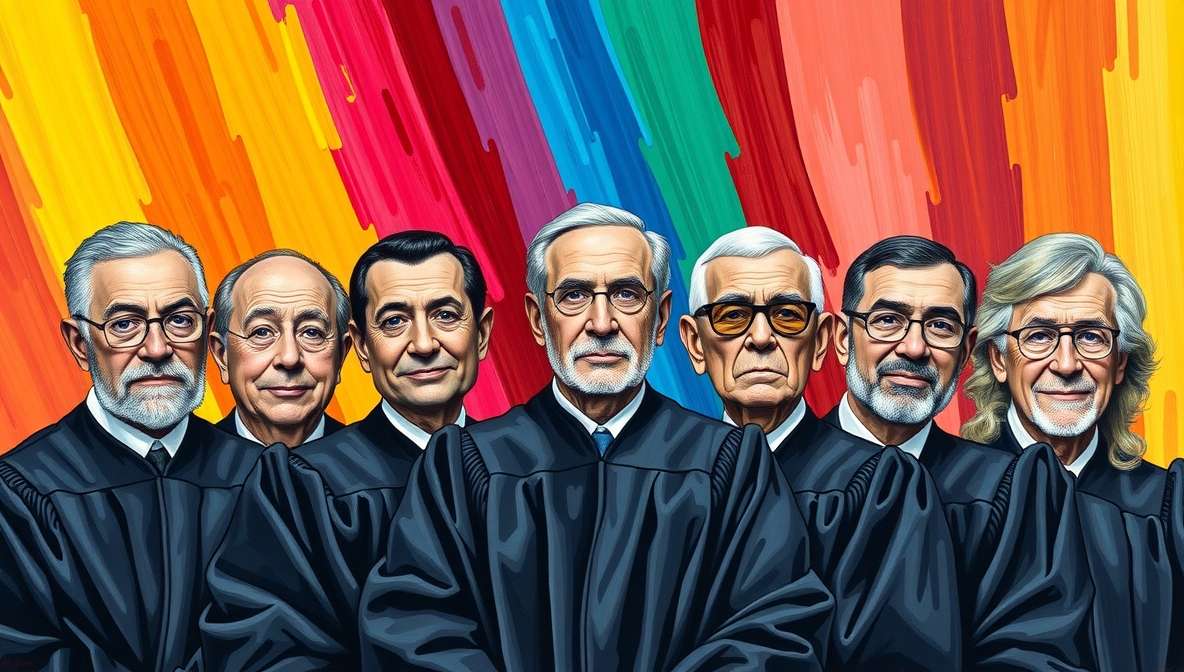
When nine justices in robes become the arbiters of who you’re allowed to be
The Supreme Court is weighing whether states can ban so-called conversion therapy for LGBTQ youth, and conservatives are crying foul louder than a rooster at a vegan convention. The debate has Republicans framing this as the ultimate government intrusion—imagine Big Brother, but instead of watching you, he’s now re-decorating your entire identity closet.
Jerry Seinfeld said it best when discussing the case: “So now the government decides what thoughts you can have about yourself? What’s next, a permit to be confused? ‘Sorry sir, your existential crisis hasn’t been approved by the Department of Who You Are.'”
The Therapist-as-Tailor Argument: When Identity Gets Measured for Alterations
Republicans are treating therapists like master tailors who can take in a hem here, let out a seam there. The logic goes: if someone wants help reconciling their feelings, why should the state play fashion police? As Bill Burr put it during his recent set, “The government banning therapy is like your mother-in-law showing up at your house and throwing out all your comfortable pants. ‘No, no, you can’t wear those. I’ve decided they’re harmful.'”
The conservative position treats identity as something that can be adjusted, fitted, altered—and that any prohibition on that process is governmental tailoring without consent. It’s the sartorial metaphor taken to its absurd conclusion: your sense of self is apparently a suit that needs occasional adjustments, and the state just fired your tailor.
Free Market of Identities: Supply, Demand, and Government Price Controls

When Republicans talk about the free market, they usually mean widgets and stocks. But now? Identity itself has become a commodity with supply and demand curves. Banning conversion therapy, in this worldview, is the equivalent of the government setting price controls on cottage cheese.
Kevin Hart addressed this during his comedy tour: “They’re treating identity like it’s Bitcoin now. ‘Sorry, the government has determined your sense of self is overvalued. We’re implementing regulations.’ Man, I just want to be confused about who I am in peace!”
The absurdity reaches peak levels when you realize conservatives—traditionally opposed to government intervention in markets—are now arguing for a free market approach to psychological counseling. Pick your identity therapy like you’d pick your streaming service: multiple options, no government interference, and probably too many choices that leave you paralyzed with indecision.
Parents Know Best (Except When They Don’t, But Don’t Tell Them That)
The parental rights argument is where Republican logic does its most impressive gymnastics routine. Parents should decide everything—except when state governments want to decide things, in which case it depends on whether we’re talking about red states or blue states.
Dave Chappelle noted the contradiction: “Republicans are out here saying ‘parents know best’ about therapy, but then turn around and tell parents exactly what books their kids can read in school. Which is it? Do parents know best or do Republicans know what parents should know best?”
The framework treats parents as omniscient beings who somehow possess perfect wisdom about complex psychological issues, while simultaneously treating state bureaucrats as bumbling fools who couldn’t find their way out of a paper bag labeled “Exit Here.” It’s selective expertise at its finest—everyone’s an expert except the people who studied this for a living.
Supreme Court as Culture War Thunderdome: Nine Referees, Zero Solutions
The Supreme Court proceedings have transformed into what can only be described as intellectual WWE. Justices aren black robes instead of spandex, use legal precedent instead of folding chairs, and the audience still leaves unsure who actually won.
Ricky Gervais captured the spectacle perfectly: “The Supreme Court deciding who you’re allowed to be is like having your dad’s mates vote on whether you should date Sarah or Emily. Except the decision is legally binding and affects millions of people. No pressure, lads.”
Chris Rock added his perspective: “They got nine people deciding if you can help your kid figure out their identity. Nine people! I can’t even get nine people to agree on where to eat dinner, and we’re letting them rule on this?”
The court has become the ultimate umpire in America’s ongoing culture war softball game, where everyone’s arguing about the rules, nobody agrees on what counts as a strike, and the ball is somehow both in play and foul at the same time.
Big Government in a Lab Coat: The Nanny State Goes Therapeutic
For Republicans, banning conversion therapy represents government overreach wearing a stethoscope. Today it’s one type of counseling; tomorrow it’s your right to see a chiropractor, drink raw milk, or consult a fortune teller about your career prospects.
Tom Segura’s take resonated with conservative audiences: “The government banning therapy is the same energy as your mom throwing out your candy on Halloween because she read an article that said sugar causes hyperactivity. Yeah, we know. We’re adults. Let us make bad decisions.”
The nanny state criticism typically reserved for seatbelt laws and smoking regulations now applies to psychological counseling. It’s the ultimate example of government knowing what’s best for you, even when you—and your parents, and your therapist—might disagree.
Health Freedom Meets Identity Freedom: A Conservative Mashup
The Republican playbook increasingly treats identity decisions like medical freedom choices. If you believed in vaccine choice, mask choice, and treatment choice during the pandemic, then logic demands you believe in therapy choice now.
Ali Wong addressed this convergence: “So you’re telling me I have the freedom to refuse a vaccine that’s been tested by thousands of scientists, but I don’t have the freedom to see a therapist who might help me figure out if I’m gay, straight, or just really confused? That’s some selective freedom right there.”
Trevor Noah connected the dots: “Republicans spent years saying ‘my body, my choice’ about masks and vaccines. Now they’re saying ‘my identity, my choice’ about therapy. At least they’re consistent about not wanting the government involved in personal decisions. Unless it’s abortion. Or marijuana. Or—okay, maybe they’re not that consistent.”
The framework treats all personal health and identity decisions as sacrosanct territory where government should never tread—a libertarian paradise where every individual is free to pursue their own potentially terrible decisions without state interference.
Science as Fashion: Today’s Consensus Is Tomorrow’s Cringe
Republicans love pointing out that scientific consensus changes more often than a teenager’s Spotify playlist. What’s true today might be debunked tomorrow, so legislating based on current science is like building your house on intellectual quicksand.
Nate Bargatze captured the skepticism: “They tell us ‘the science is settled’ on therapy, but these are the same scientists who told my dad eggs were bad, then good, then bad again, then good but only on Tuesdays. Forgive me if I’m not rushing to let them legislate my kid’s identity.”
The conservative argument suggests that banning any therapy based on contemporary research is premature—wait fifty years, let the studies pile up, see if the science shifts. In this worldview, current psychological research is basically astrology with better funding and fancier terminology.
The Therapy Menu: No Substitutions, No Modifications, Government Orders Only
Imagine walking into a restaurant where the government has pre-selected your meal. You can’t order the cottage cheese, can’t swap the dressing, can’t even ask questions about ingredients. That’s how Republicans characterize therapy bans—the state has created a prix fixe menu for identity, and you’re just supposed to eat what you’re served.
Jim Gaffigan quipped: “Banning certain therapy is like a restaurant that only serves kale. ‘Sorry, we’ve determined that’s the only healthy option. No, you can’t have the burger. Yes, we know you hate kale. No, your preferences don’t matter. Enjoy your leafy greens.'”
The menu metaphor extends to absurdity: if the state can remove one dish from the psychological buffet, what’s stopping them from removing others? Today it’s conversion therapy; tomorrow it’s cognitive behavioral therapy because someone decided it’s too confrontational. Where does it end?
Red States as the Identity Wild West: Freedom’s Last Frontier
In the conservative imagination, red states represent the final frontier where individual liberty still means something. These are the territories where you can still choose your therapist, pick your counselor, and navigate identity without bureaucratic interference.
Sarah Silverman, ever the provocateur, said: “Republicans want red states to be the Wild West of identity, where everyone’s free to be whoever they want or whoever they think they should be. It’s like the frontier, but instead of cowboys and horses, it’s therapists and identity crises.”
The geographic divide becomes a metaphor for philosophical differences: blue states offer protection through prohibition, while red states offer freedom through permissiveness. One person’s safety net is another person’s straightjacket, and the Supreme Court gets to decide which states can install which apparatus.
The Ironic Twist: Banning the Ban Requires Federal Power
Here’s where Republican logic performs its most spectacular backflip: to stop states from banning therapy, you might need federal legislation that… bans the bans. It’s using national government power to protect local freedom, which is roughly equivalent to using a sledgehammer to install a lightbulb.
Bert Kreischer summed up the paradox: “So Republicans want to use the federal government to stop state governments from banning stuff, which means they’re for big government when it’s their kind of big government. It’s like being against alcohol except when it’s whiskey. The logic makes perfect sense if you don’t think about it.”
Gabriel Iglesias added: “They’re gonna ban the ban, which sounds like something you’d do in a game of double-dog-dare, not federal legislation. ‘I ban your ban!’ ‘Well, I ban your ban of my ban!’ Eventually someone’s gonna ban the ban of the ban and we’ll all be confused.”
The conservative position requires embracing federal power—the very thing Republicans claim to oppose—to prevent state power from overreaching. It’s philosophical pretzel logic worthy of an Olympic gymnastics gold medal.
The Bottom Line: Your Identity, Their Rules, Everyone’s Confused
Whether the Supreme Court upholds or strikes down conversion therapy bans, one thing is clear: identity has become America’s newest battleground, complete with battle lines, talking points, and enough hypocrisy to fill a congressional library.
Republicans argue that government has no business in the therapy room, that parents and individuals should chart their own paths, and that banning any form of counseling sets a dangerous precedent for future prohibitions. They’re not wrong that it’s complicated—though they might be wrong about everything else.
The real question isn’t whether conversion therapy works or whether it’s harmful (spoiler: most psychological research suggests it’s the latter). The question is who decides: you, your family, your therapist, or nine justices who’ve probably never spent a day counseling anyone through an identity crisis?
As this satirical examination shows, the conservative position on conversion therapy bans reveals more about Republican philosophy than about therapy itself. It’s about freedom, choice, parental rights, and the eternal conservative suspicion that government—especially blue state government—can’t be trusted to make good decisions about anything, especially not something as personal as identity.
And in the end, maybe that’s the real joke: we’re all just trying to figure out who we are, and somehow that became a Supreme Court case.