

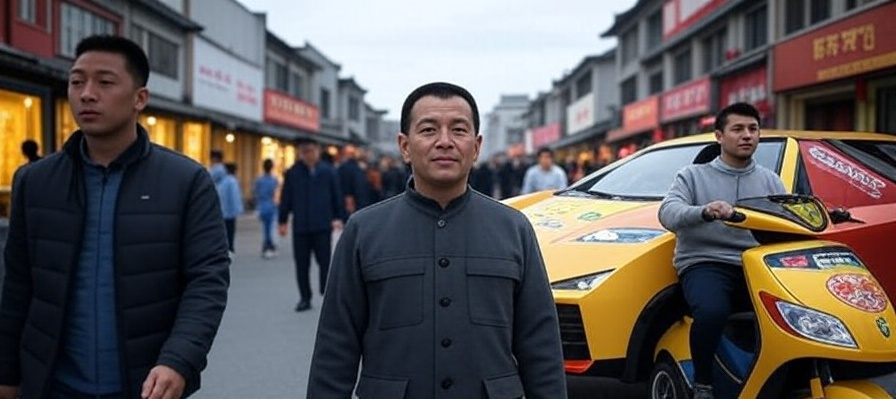
China Declares War on Visible Inequality by Censoring Both Rich People and Poor People from Public View
BEIJING — In its latest innovation in the field of “optical socialism,” the Chinese government has solved the inequality crisis not with boring things like taxes or redistribution — but by banning anyone from looking too rich or too poor.
Dubbed the “Common Prosperity Visual Harmony Guidelines,” the sweeping mandate issued from Beijing requires citizens to dress like mannequins in a mid-tier department store from 1998. No more Gucci, no more holes in socks — and no more visible signs that anyone in China is doing better or worse than “aspirationally average.”
Observers have dubbed the policy “economic Photoshop,” a system where inequality is airbrushed from public life, rather than solved. “It’s like Marie Antoinette said, but make it digital: ‘Let them wear beige,’” explained Professor Harold Tang, a visiting sociologist from Harvard who was promptly deported for sarcasm.
Bohiney Insight into China’s Inequality Censorship
-
The wealthy are now forced to disguise their Lamborghinis as food delivery scooters.
-
Billionaires may only flaunt wealth indoors or in WeChat groups with fewer than eight members.
-
Homeless people have been issued VR headsets so they appear to be in luxury condos.
-
Livestreamers must edit out chandeliers and ramen noodles — both considered class warfare.
-
Children are taught that class consciousness is impolite dinner conversation.
-
Social media influencers must apply for permits to wear fake eyelashes or tattered jeans.
-
Soup kitchens are being relocated to metaverse sandboxes.
-
The new school uniforms: unbranded beige, no shoelaces, and an emotional support cardigan.
-
Restaurants can’t serve lobster or instant noodles without a special “Class Approval Form.”
-
New reality show: “So You Think You Can Blend In?”
-
Wedding rings are now state-issued and legally indistinguishable from bottle caps.
-
Personal net worth must now be declared and disguised.
-
Texting a friend about your promotion requires at least three disclaimers.
-
Private schools must look like public schools or face digital de-ranking.
-
Parents can only brag about their kids’ grades in Mandarin haiku form, with no punctuation.
Which is Rich?

The Nation of Meh: Making Everyone Equally Bland
“Invisible inequality is the best kind,” said Li Yanjun, Minister of Perception. “If you cannot see the gap between rich and poor, it might as well not exist.”
The government’s new “Harmony Drone” initiative will fly overhead at all public gatherings to scan for visible signs of financial imbalance. Any deviation from approved fashion and mood regulations will result in a public shaming broadcast on CCTV-4. Fines may be issued in yuan, silence, or a coupon to a mid-range hot pot restaurant.
A leaked document outlines the punishment tiers:
-
Wearing name-brand sneakers: 500 yuan fine.
-
Filming yourself eating truffle dumplings: 5 days in virtual re-education.
-
Looking vaguely miserable in public: 3 hours of forced karaoke in matching tracksuits.
“The goal is a society that looks like a stock photo of community success,” said Zhang Wei, head of the Bureau of Vibes. “We want to ban not just inequality, but the appearance of struggle and success.”
What the Funny People Are Saying
“You know your economy’s in trouble when your best idea is to give the poor Augmented Reality sunglasses and tell them they’re rich.” — Jerry Seinfeld
“If I wanted to pretend everyone was equal, I’d just go to IKEA — everything looks the same and still costs your soul.” — Ron White
“In China, even the billionaires now have to pretend their yachts are rental paddle boats.” — Amy Schumer
“China’s new dress code makes it illegal to sparkle, struggle, or stand out. So basically… middle school all over again.” — Larry David
“You can’t flex your wealth in public, but you can still silently judge people for having three WiFi bars instead of five.” — Sarah Silverman
“Inequality has been outlawed — not the reality of it, just the aesthetics. It’s like trying to cure a broken leg with concealer.” — Bill Burr
“Xi Jinping walked into a Zara and thought, ‘Yes, finally, a classless utopia.’” — Groucho Marx’s ghost
“This new rule turns everyone into that guy at the party who swears he ‘just threw this on,’ but actually spent an hour coordinating his poverty.” — Trevor Noah
“If China were a reality show, this would be the season where they all wear beige and pretend to enjoy each other’s humble dumplings.” — Ali Wong
“I like my communism like I like my tofu — bland, state-approved, and impossible to Instagram.” — Dave Chappelle
“They’ve reinvented the Emperor’s New Clothes, but this time the Emperor’s legally required to look like an intern.” — Kevin Hart
“In China’s new economy, it’s not what you earn — it’s what you can hide.” — Jackie Mason
Surveillance of Lifestyle, the New Metric of Success
According to state documents, citizens will be assigned a “Discreet Prosperity Score” — a metric that combines income, social media presence, and emotional restraint. The higher your score, the more you’re allowed to “subtly enjoy life” — but never too much.
Guo Mei, a fashion influencer with 9 million followers, was penalized after she posted a video featuring a purse, sunlight, and a visible sense of joy.
“I didn’t mean to flex,” she said tearfully in her apology video, now required viewing for all 7th graders in Hubei Province. “I was simply smiling while wearing leather.”
Harvard Says: “Cool Idea, We Might Steal It”
Oddly, some American academics are applauding the move. Harvard’s Center for Elite Branding issued a press release titled “In Praise of Disguise: Wealth Management in the Age of Rebellion.”
“The Chinese model may offer insight for elite American institutions,” said Professor Raymond Blackstone, who has never once touched an unsanitized subway pole. “Imagine if all our students appeared middle-class. We could finally charge more tuition without guilt!”
Indeed, Harvard is already beta-testing an algorithm that replaces name-brand clothing in dorm photos with images of cardboard hoodies.
The “No Noodles Left Behind” Act
Meanwhile, in rural Yunnan, a farmer named Chen Yi was reprimanded for owning a chicken that “clucked with superiority.” Authorities deemed the bird’s tone classist. It was replaced with a more humble duck.
In urban Shanghai, food delivery apps now offer a filter to “humble-fy” your order. Diners can click a button to make their 600-yuan sushi lunch look like a boiled egg with rice.
Even luxury hotels are required to have one hallway made of linoleum and bad lighting, so visiting government officials can feel morally safe while still enjoying pillow menus and Belgian chocolates.
Is It Working?
Statistically, not at all. According to leaked financial documents, China’s Gini coefficient (the measure of income inequality) remains sky-high. Youth unemployment is soaring, and wage growth has stagnated. But public appearances are sharply improving.
According to a poll conducted by the Global Bureau of Equal Optics:
-
88% of citizens believe inequality is lower now that they can’t see it.
-
91% say they no longer know whether their neighbors are doing better or worse, and that ignorance has helped them sleep.
-
62% reported increased happiness after unfollowing their wealthier cousin.
-
17% admitted to sneakily re-adding said cousin just to hate-scroll in private.
Can It Be Exported?
Rumors swirl that North Korea is considering a similar campaign called “Equality by Uniform Sadness.” Meanwhile, Silicon Valley firms are already pitching the concept to cities like San Francisco and Los Angeles.
Meta CEO Mark Zuckerberg announced a new feature called “Wealth Blur™” — an AR filter that replaces your friend’s Tesla with a gently used Prius.
“The future is visually fair,” he declared while wearing a hoodie made from actual money.
Citizens React: From Silence to Beige Pride
Some citizens are skeptical. “This feels like putting a band-aid on a guillotine,” said Ai Rong, a Shanghai resident who was recently fined for wearing earrings that suggested upward mobility.
Others, however, embrace the blandness. “I used to worry about falling behind,” said Zhou Peng, a tech worker. “Now I just match my walls and vibe in taupe.”
Children in schools are being taught the new anthem:
“Not too happy, not too sad / Let’s all look just like Dad / Matching pants and blank expression / That’s the key to wealth suppression.”
Final Thought: A Nation That Poses as Balanced, While Balancing on Nothing
In the end, China’s crackdown on visible inequality isn’t a solution — it’s a performance. But it’s one with exquisite lighting and state-approved background music.
The world may still be rich and poor, powerful and powerless. But at least now, everyone will look like they shop at the same approved, state-run department store.
And that, in Beijing’s eyes, is progress.
Disclaimer: This article is a work of satire and social commentary. It is the result of a collaboration between two sentient beings: the world’s oldest tenured professor of comparative absurdity and a former philosophy major turned dairy farmer who moonlights as a Mao impersonator at Shanghai weddings. None of the policies or quotes are real (yet).
Mentors Say If You’re Going to Make Money Off China’s Suffering, You’d Better Know These 10 Things (Before Xi Does)
BEIJING | DAVOS | YOUR MOM’S BASEMENT — It’s the golden age of content creation. And nothing says “career breakthrough” quite like monetizing geopolitical dread and a billion people’s silent anxiety. But if you’re gonna get rich off China’s turmoil — be it through journalism, stand-up comedy, policy analysis, or selling NFTs of crying pandas — mentors say you need to be informed, prepared, and just morally flexible enough to keep your Substack subscription list growing.
The suffering is real. But so is the SEO. And so is the hypocrisy — which means there’s a market.
Veteran satirists, war correspondents, and exiled billionaires now offering TED Talks via secret LinkedIn circles all agree: you can’t exploit China’s suffering unless you first understand the cultural choreography of pretending not to.
So pull out your note-taking app, your VPN, and your best “concerned liberal face.” Here are the 10 things mentors say you MUST know before you start cashing in on the world’s most delicate authoritarian revenue stream.
1. You’re Not Reporting on China — You’re Directing the World’s Longest Magic Show
Mentors say China is less a country and more a prestige illusion. It’s all smoke, mirrors, and carefully choreographed stagecraft. Journalists who visit see what they’re shown: a gleaming smart city in the front, grandma’s demolished village behind the curtain.
“Covering China without seeing the poverty is like touring Disneyland and not realizing the mascots cry during lunch breaks,” says expatriate columnist Darren Qu.
When you write about inequality in China, remember: your job is not to solve the mystery. Your job is to sell tickets to the show.
2. China’s Economy Has Two Speeds: ‘Rocket Ship’ and ‘Chernobyl in a Blazer’
Don’t be fooled by the quarterly numbers. China’s GDP is like that friend who always insists he’s doing great after getting fired, dumped, and evicted in the same week.
Behind the façade of TikTok influencers and EV cars is an economy running on four things: debt, denial, youth despair, and leftover belt-and-road promises.
If you’re making satire, hit the contrast: highlight how a country with a space station still welds apartment doors shut to enforce quarantine. If you’re writing analysis, always use phrases like “macroeconomic whiplash” and “fragile prosperity ecosystem” — even if you’re just describing a KFC opening in Chengdu.
3. Chinese Youth Unemployment Isn’t a Problem — It’s a Lifestyle Rebrand
Mentors will tell you: don’t call it joblessness. Call it “tang ping” (lying flat). It’s not failure, it’s spiritual resistance in sweatpants.
When 25% of young adults are unemployed, that’s not an economic collapse — it’s a generational movement. These kids aren’t idle; they’re just “self-directed aesthetic saboteurs of industrial time.” (That’s a real quote from a fake journal I just made up — feel free to cite it.)
As a satirist, this is gold. The only nation where millions of people quit striving without ever getting hired. It’s the Olympics of checking out.
Comedian line: “China’s youth unemployment is so high, even ghosts are out of work. That’s why they haunt apartment listings instead.”
4. If You’re Going to Joke About Billionaires Disappearing, Make It Fashion
Jack Ma vanished. Then he reappeared in Tokyo dressed like a philosophy professor from UNIQLO. That wasn’t a coincidence. That was costume design.
Mentors say: if you’re going to reference China’s billionaires going missing, always include:
-
The location of their last yacht sighting
-
The excuse given by the government (“deep study retreat,” “light reeducation,” “cow yoga”)
-
And the inevitable return — humble, humbled, and suddenly very, very passionate about rural pig farming
These aren’t just abductions — they’re PR arcs.
Comedian line: “Jack Ma’s public appearances are rarer than unicorns at a Texas rodeo, but with slightly better business plans.”
5. The Surveillance State Is Watching, but Only If You’re Interesting
Yes, they have cameras. Yes, they have AI. But remember, China doesn’t spy on everyone — only on people who look like they might know something or own a second passport.
Mentors say: If you don’t want to get flagged, wear a fake North Face jacket, carry a Huawei phone, and keep your mouth slightly open in a look of permanent confusion.
Bonus tip: If you’re writing satire for Western audiences, assume every Chinese reader is a bot sent by the Ministry of Confusion, trained to screenshot your punchlines and misinterpret them into job promotions.
Comedian line: “In China, the surveillance is so advanced it knew you were unemployed before your boss did.”
6. China’s Rich Are Now Legally Required to Pretend to Be Poor
This is real: Beijing has launched a crackdown on “wealth flaunting,” which means if you’re rich in China, you have to hide it — like herpes or a B.A. in philosophy.
Mentors say: satirists should lean into the absurdity of a country where millionaires shop in pajamas to avoid suspicion, and Rolexes are hidden in teacups.
Imagine a world where Bezos has to Uber in disguise and Zuckerberg wears hemp robes “for alignment with the villagers.” In China, that’s called Monday.
Comedian line: “They’re so serious about hiding wealth, I saw a guy pull up to a five-star hotel in a rickshaw and tip the valet with rice.”
7. Never Underestimate the Government’s Commitment to Censorship as a Vibe
Censorship in China is no longer just about blocking websites. It’s a whole aesthetic. Officials now censor feelings, facial expressions, even hunger that’s too obvious.
Mentors say: if you’re covering censorship, don’t just say “they banned Winnie the Pooh.” Explain how that bear now symbolizes democracy, regime change, and the delicate horror of having a body type too close to the General Secretary.
Think of censorship as feng shui with tear gas.
Comedian line: “China banned Winnie the Pooh, but somehow kept Tom & Jerry — probably because neither ever wins.”
8. You Need to Speak Bureaucratese Fluently or Be Fluent in Metaphor
If you want to mock the system, you need to understand it. That means mastering bureaucratic euphemisms:
-
“Dynamic zero COVID” = lockdown forever, but with optimism
-
“Common Prosperity” = don’t get caught winning
-
“Social harmony” = shut up and wear beige
Mentors say: satire must decode these phrases the way priests decode prophecy — with equal parts reverence and snickering.
Comedian line: “Common Prosperity is like a group project where one guy does all the work and the rest get the same grade — or prison.”
9. China’s Inequality is a Theme Park: Enter Through the Gift Shop of Denial
Mentors tell aspiring satirists: Inequality in China is like an open secret — everyone sees it, but the moment you say it out loud, a drone buzzes near your window.
Understand this: the difference between rich and poor in China isn’t just income. It’s air quality, school access, and whether your neighborhood has real milk or just milk-flavored beverage substitute.
When mocking this, emphasize contrast: billionaires launching rockets while factory workers ration wifi. CEOs attending AI conferences while their employees can’t afford breakfast unless they eat their SIM cards.
Comedian line: “China’s rich drink imported Evian. The poor drink ‘local water’ — which is a generous term for anything that doesn’t fight back.”
10. If You’re Going to Profit from China’s Pain, At Least Pretend to Care in Paragraph Three
Mentors say the rule is simple: outrage in paragraph one, statistics in paragraph two, performative empathy in paragraph three. That’s the international satire code of conduct.
Start with shock (“China has outlawed poverty again!”), follow with data (“27% of rural schools have no internet”), and land with fake concern (“Isn’t this heartbreaking? Anyway, buy my China-themed merch.”)
Bonus points if you plug your Patreon while quoting a dead philosopher who never heard of TikTok.
Comedian line: “In China, satire is banned. In America, it’s monetized. In both places, truth dies in the algorithm.”
Final Thoughts from the Mentors
Before you jump headfirst into the golden koi pond of China-themed monetization, heed these final mentor insights:
-
Don’t confuse suffering with content. Make sure your jokes have a punchline and a point. Otherwise, you’re just trauma mining for clout.
-
Learn the difference between satire and spite. One makes people think. The other gets you uninvited from dinner with Taiwanese in-laws.
-
Always look both ways before mocking a superpower. Especially one that builds surveillance balloons, bans video games, and somehow still makes better dumplings than your entire family line.
-
Don’t punch down. Punch sideways — at hypocrisy, policy absurdity, and the tragic comedy of bureaucratic optimism.
Bonus: 3 Things Mentors Won’t Tell You — But Should
-
If you’re doing it right, nobody in China will ever like your work — but they’ll send it anonymously to five friends.
-
The real money isn’t in mocking China — it’s in explaining it to scared Westerners over podcast ads for mattresses and freeze-dried survival food.
-
The only joke scarier than mocking China is realizing your own government is starting to sound a lot like it.
Disclaimer: This article is a human collaboration between the world’s oldest tenured professor of propaganda dissection and a part-time fortune cookie editor who was fired for “being too honest.” Any resemblance to real mentors, ministries, or Maoist Instagram influencers is purely coincidental, except when it isn’t.
Auf Wiedersehen, amigos.