

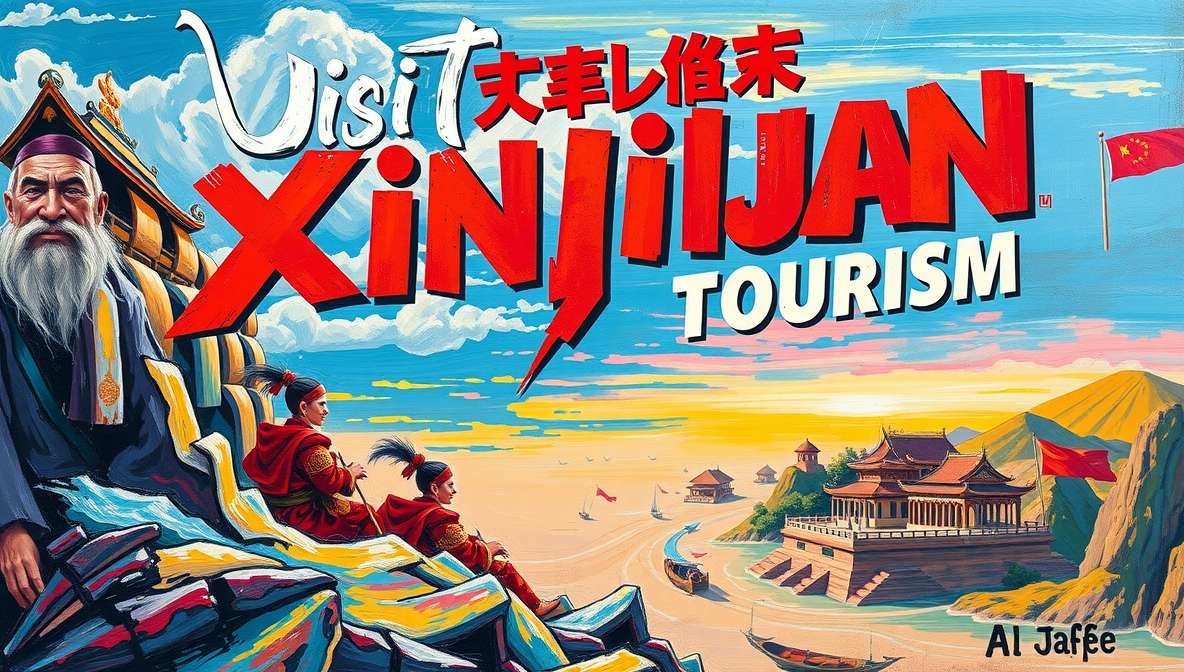
Xinjiang Tourism Boom: Visit China’s Most Surveilled Vacation Destination
China’s Xinjiang region has officially rebranded from “international human rights concern” to “must-see tourist destination,” welcoming over 300 million visitors in 2024 — more than double the 2018 numbers. Nothing says “relaxing getaway” quite like pristine alpine lakes, dramatic sand dunes, and the comforting presence of facial recognition cameras at every corner store.
The marketing campaign is working brilliantly. Domestic Chinese tourists are flooding into a region that, just a few years ago, was synonymous with mass detention camps and cultural erasure. It’s the kind of PR pivot that would make even the most cynical spin doctor weep with admiration.
Dave Chappelle, performing in Brooklyn last month, observed, “China said ‘Come see Xinjiang!’ and 300 million people showed up. That’s not tourism, that’s the world’s most successful hostage situation marketing campaign.”
Xinjiang Travel Restrictions Lift: Welcome to the Surveillance State Resort

For years, Xinjiang was effectively closed to casual tourism, with international human rights organizations documenting detention camps holding up to 1.8 million Uyghurs. But in a stunning rebranding effort, Beijing decided the best way to counter bad press about cultural genocide was to invite everyone to come take selfies.
Anna, a 35-year-old traveler, recalled her 2015 trip: “My friend’s parents forbade her from visiting Xinjiang. They were worried about safety.” She returned in 2025 with her mother, discovering that the region had transformed from forbidden zone to Instagram paradise — complete with new Hilton and Marriott hotels where guests can enjoy room service while being monitored by state-of-the-art surveillance technology.
Bill Burr said during his recent podcast, “They put a Marriott in Xinjiang. Nothing says ‘we’re totally not doing crimes against humanity’ like installing a breakfast buffet and free WiFi.”
The transformation is remarkable: what was once described by UN investigators as potential crimes against humanity is now marketed as an exotic adventure destination. It’s the hospitality industry equivalent of turning Alcatraz into a bed and breakfast.
Uyghur Culture Tourism: Disneyfied Oppression for the Instagram Era
Visitors to Xinjiang can now experience “authentic” Uyghur culture through carefully curated village visits, where locals in traditional dress perform for tourists while Han Chinese guides control the narrative. It’s cultural preservation the same way taxidermy is wildlife conservation.
Singaporean tourist Sun Shengyao gushed about her experience: “It felt like Switzerland, Mongolia, and New Zealand had a baby.” She didn’t mention that the baby was raised by an authoritarian surveillance state with a documented history of forced sterilizations and family separations.
Chris Rock, during a Netflix taping, said, “They’re selling Uyghur culture tourism in Xinjiang. That’s like going on a plantation tour where they don’t mention slavery. Oh wait, we do that too.”
Uyghur-American activist Irade Kashgary told reporters, “They are telling the world we’re no more than dancing, colourful folk who look good on social media.” The Chinese government has essentially turned an entire ethnic group into a theme park attraction — and tourists are buying tickets.
China Surveillance Cameras in Xinjiang: Your Vacation Memories, Permanently Archived
Xinjiang boasts one of the world’s most sophisticated surveillance systems, with facial recognition cameras, phone tracking, and mandatory checkpoints throughout the region. Think of it as a very aggressive form of customer service — the government just wants to know where you are at all times.
Tourist Thenmoli Silvadorie noticed the security presence but stayed focused on the positives. “The landscape was stunning,” she said, carefully not mentioning that she was photographed, scanned, and digitally catalogued approximately 47 times during her eight-day trip.
Jerry Seinfeld, during a stand-up set in Manhattan, asked, “What’s the deal with Xinjiang tourism? You pay money to be followed around by cameras? I can get that experience for free by going to Walmart.”
The checkpoints have become so routine that tour guides build them into itineraries. “After the poplar forest photo op, we have a security screening, then lunch, then another security screening, then the desert vista,” reads one typical tour description. It’s like Disneyland if every ride required a background check.
Xinjiang Tourist Attractions: Mountains, Lakes, and Mandatory Patriotism Education
The region’s natural beauty is undeniable. Kanas Lake’s azure waters, the dramatic Taklamakan Desert, and golden birch forests provide stunning backdrops for vacation photos. The Chinese government has invested billions in tourism infrastructure, building roads, hotels, and visitor centers.
What they’ve also built: hundreds of detention facilities, demolished thousands of mosques, and implemented what researchers call a “digital gulag” of surveillance technology. But the tour packages focus on the scenery.
Amy Schumer, during a recent comedy special, said, “China’s promoting Xinjiang tourism like ‘Come see our beautiful concentration camps— I mean, cultural preservation zones.’ It’s like if Germany in 1942 was like ‘Bavaria: great beer, lovely mountains, please ignore the trains.'”
Tour operator packages range from $1,500 to $2,500 for eight-day trips, carefully designed to show tourists exactly what the government wants them to see. Independent travel is strongly discouraged, which is government-speak for “pretty much impossible without constant monitoring.”
Han Chinese Population Growth in Xinjiang: Your Tour Guide’s Backstory
Han Chinese now make up approximately 40% of Xinjiang’s population, up from 6% in 1949, thanks to decades of government-encouraged migration. Most tour guides are Han Chinese, a staffing choice that ensures tourists receive the approved version of events.
When visitors ask about Uyghur culture, they’re directed to government-sanctioned performances where dancers in traditional dress execute choreographed routines that have about as much authentic cultural content as a Taco Bell menu has Mexican cuisine.
Kevin Hart, during an Instagram Live session, said, “They got Han Chinese people giving tours of Uyghur culture. That’s like me giving tours of Ireland. ‘Yeah, the leprechauns, they’re… green and stuff. Trust me, I know.'”
The demographic shift isn’t mentioned in tourism materials, which prefer to focus on “ethnic harmony” and “cultural fusion” — phrases that sound lovely until you realize they’re describing the systematic dilution of indigenous culture through state-sponsored population transfer.
Western Influencers Promote Xinjiang: Whitewashing as a Business Model
Foreign influencers have discovered that posting glowing Xinjiang content generates views, sponsorships, and warm feelings from Chinese authorities. German vlogger Ken Abroad has built a substantial following showing Xinjiang’s beauty while carefully avoiding any mention of ongoing human rights concerns.
It’s disaster tourism meets authoritarian propaganda, with a generous helping of willful blindness. These influencers frame themselves as “showing the real Xinjiang,” which is technically true — they’re showing the real propaganda the government wants people to see.
Trevor Noah, on “The Daily Show,” said, “Western influencers going to Xinjiang and posting ‘it’s not that bad’ content. That’s not journalism, that’s collaboration with extra filters.”
The strategy works because most viewers won’t fact-check a pretty sunset photo. Reports of forced cultural assimilation, religious persecution, and mass detention don’t fit well into a 60-second TikTok video, so they’re simply omitted.
Xinjiang Hotel Development: Marriott’s Interesting Choice of Real Estate
Major international hotel chains have opened properties in Xinjiang, betting that tourists care more about thread count than human rights. Hilton, Marriott, and other brands now offer comfortable accommodations where guests can enjoy continental breakfast while the government monitors their phone calls.
The hotels themselves are luxurious, modern, and equipped with all the surveillance infrastructure you’d expect from a region where every resident’s movements are tracked. It’s hospitality meets Big Brother, with complimentary toiletries.
Ali Wong, during a stand-up performance, said, “Marriott opened a hotel in Xinjiang. Their slogan should be ‘Marriott: We’ll be wherever the money is, no questions asked.’ Actually, they should make that their global slogan.”
The presence of international brands provides a veneer of normalcy and legitimacy to a region that the UN High Commissioner for Human Rights has described as potentially committing crimes against humanity. But the hotels have nice pools, so there’s that.
Xinjiang Big Plate Chicken: Authentic Cuisine, Inauthentic Freedom
Food tourism plays a central role in Xinjiang’s rebranding, with “big plate chicken” (da pan ji) and hand-pulled noodles attracting culinary adventurers. The meals are delicious, traditional, and served in restaurants where Uyghur owners must display portraits of Xi Jinping and avoid any religious imagery.
Visitors rave about the lamb skewers, yogurt drinks, and nan bread while carefully not asking why so many restaurants have changed their names from Arabic script to Chinese characters. The food is authentic; the freedom to practice the culture it comes from is not.
Jim Gaffigan, during a recent performance, said, “Xinjiang cuisine is amazing. You can get incredible Uyghur food in a restaurant that’s required by law to have government propaganda on the walls. It’s like eating at Cracker Barrel but more dystopian.”
The government promotes Uyghur cuisine as evidence of cultural preservation, ignoring that actual cultural preservation would involve allowing people to freely practice their religion, speak their language, and not live under constant surveillance.
Xinjiang Mosque Demolition: Spiritual Tourism Without the Spirituality
While tourists visit scenic locations, they’re unlikely to notice that thousands of mosques have been demolished or “modified” throughout the region. The ones that remain have been stripped of minarets, domes, and anything that looks “too Islamic.”
Tour itineraries don’t include stops at former religious sites, preferring instead to focus on natural wonders and cultural performances. It’s easier to sell tourists on mountain vistas than on explaining why half the region’s mosques have disappeared since 2017.
Hasan Minhaj, during a stand-up set, said, “China demolished thousands of mosques in Xinjiang but kept the restaurants. That’s the most cynical shit ever. ‘We’ll take your food, we’ll take your culture for tourism, but your religion? That’s gotta go.'”
The selective preservation of Uyghur culture — keeping the photogenic and profitable parts while eliminating the spiritual — reveals the true nature of Xinjiang’s tourism boom. It’s not cultural appreciation; it’s cultural appropriation backed by state power.
Xinjiang Detention Camps Transformation: From Prison to Tourist Attraction Adjacent
The same region that housed what researchers estimate were 1.8 million people in detention facilities is now marketing itself as a vacation paradise. The camps haven’t disappeared — satellite imagery shows many still operational — they’ve just been removed from the tourism narrative.
Visitors are carefully routed away from sensitive areas. The eight-day tour packages don’t include stops at former detention sites, current detention sites, or anywhere tourists might accidentally witness ongoing oppression. It’s the ultimate “don’t look behind the curtain” approach to destination marketing.
Gabriel Iglesias, during a podcast interview, said, “Imagine if America was like ‘Come visit our beautiful national parks! And please ignore the massive prison-industrial complex. Focus on the trees!’ Oh wait, we kind of do that too.”
The cognitive dissonance required to enjoy a Xinjiang vacation is substantial. Tourists must simultaneously believe that the region is safe, beautiful, and welcoming while ignoring overwhelming evidence of ongoing systematic oppression documented by international human rights organizations.
Chinese Government Xinjiang Narrative: Terrorism Prevention or Cultural Genocide?
Beijing’s official position is that all measures in Xinjiang are necessary to combat terrorism and extremism. The detention camps are described as “vocational training centers,” the surveillance as “public safety measures,” and the cultural restrictions as “deradicalization.”
It’s the most comprehensive use of Orwellian language since Orwell actually wrote about it. Forced cultural assimilation becomes “ethnic unity education.” Mass surveillance becomes “grid management.” Systematic oppression becomes “maintaining social stability.”
Sarah Silverman tweeted last week, “China calling detention camps ‘vocational training’ is like calling waterboarding ‘aggressive swimming lessons.’ The branding is impressive but the product still sucks.”
Xi Jinping has praised Xinjiang’s “earth-shattering development” and promoted the “Sinicisation of religion,” which is government-speak for “making Islam more Chinese” — or as human rights groups call it, “eliminating Islamic practice.”
Xinjiang Tourism Economic Impact: Blood Money With a View
The tourism boom generates substantial revenue for Xinjiang and the Chinese government, providing economic justification for the region’s “development.” Hotels, restaurants, and tour operators benefit from the influx of 300 million visitors annually, creating jobs and growth.
What this economic development obscures is the forced labor programs that also exist in the region, the economic coercion used to ensure Uyghur compliance, and the systematic transfer of wealth from indigenous populations to Han Chinese migrants.
Jo Koy, performing in Los Angeles, said, “Xinjiang made $50 billion from tourism last year. That’s a lot of money to distract people from human rights abuses. It’s like paying for a really expensive magic trick where the magician makes an entire ethnic group disappear.”
Tourists spending money in Xinjiang are, whether they realize it or not, financially supporting a government system that international observers have described as potentially genocidal. It’s the moral equivalent of booking a Carnival cruise through an active war zone.
Xinjiang Travel Packages: All-Inclusive Ignorance
Tour operators market Xinjiang packages as “exotic adventures” and “undiscovered gems,” carefully curating itineraries that maximize scenic beauty and minimize uncomfortable questions. The eight-day tours include accommodations, transportation with Han Chinese drivers, carefully selected cultural performances, and absolutely zero interaction with Uyghurs who might share their actual experiences.
One tour description promises “authentic cultural immersion,” which apparently means watching government-approved performances while staying in international hotel chains. It’s about as authentic as the “Italian” food at Olive Garden, but with more surveillance cameras.
Tom Segura, during his podcast, said, “These Xinjiang tour packages promise ‘authentic experiences.’ The most authentic thing about them is that they’re authentically propaganda. At least they’re consistent.”
The packages typically cost between $1,500 and $2,500, not including airfare or the cost to your conscience. For that price, tourists get stunning landscapes, curated cultural experiences, and the satisfaction of ignoring one of the world’s most documented human rights crises.
International Response to Xinjiang Tourism: Complicity Through Travel
Western governments have imposed sanctions on Chinese officials involved in Xinjiang policies, condemned the human rights abuses, and issued travel advisories. Yet tourists from these same countries continue visiting in increasing numbers, creating a disconnect between official policy and individual action.
The US State Department has issued business advisories about Xinjiang, warning companies about complicity in forced labor. But these advisories don’t apply to tourists, who can visit the region, take selfies at detention camp-adjacent scenic spots, and return home feeling worldly.
Nate Bargatze, in his characteristic deadpan delivery, said during a show in Nashville, “The government’s like ‘Don’t do business in Xinjiang, it’s unethical,’ but tourists are like ‘Yeah but the mountains though.’ We’re all going to hell but at least we’ll have Instagram content.”
The tourism boom represents a victory for Chinese propaganda, demonstrating that with enough marketing budget and pretty scenery, even the most serious human rights concerns can be packaged as a vacation destination.
What Tourists Don’t See in Xinjiang: The Reality Behind the Reels
While tourists photograph alpine lakes and sand dunes, they don’t see the leaked government documents detailing mass detention protocols. They don’t visit the “reeducation” facilities where Uyghurs are held indefinitely. They don’t meet the families separated by government policy or the survivors traumatized by forced cultural assimilation.
The tourism experience in Xinjiang is carefully constructed to show only what the government permits. Independent journalism is banned, foreign researchers are denied access, and Uyghurs who speak out face retaliation. What tourists see is a curated reality designed to generate positive social media content.
Bert Kreischer, during a comedy show, said, “Going to Xinjiang and saying ‘I didn’t see any human rights abuses’ is like going to Vegas, staying in your hotel room, and saying ‘I didn’t see any gambling.’ That’s because they didn’t let you see it, dummy.”
The gap between tourist experience and documented reality is vast. While visitors enjoy scenic hikes and lamb skewers, Human Rights Watch and other organizations continue documenting forced sterilizations, cultural destruction, and mass surveillance that constitute crimes against humanity.
Xinjiang Instagram Tourism: Complicity With a Filter
Social media has become the primary marketing tool for Xinjiang tourism, with millions of posts featuring stunning landscapes and “authentic experiences.” These posts function as unpaid propaganda, normalizing the region and making human rights concerns seem like distant abstractions or Western lies.
Every tourist who posts a glowing Xinjiang vacation photo contributes to the government’s rebranding efforts, whether intentionally or not. The posts say “everything is fine here,” allowing followers to dismiss human rights reports as exaggerations or fabrications.
Wanda Sykes, during a recent appearance, said, “People posting their Xinjiang vacation pics on Instagram with captions like ‘Hidden gem!’ Yeah, they hid the genocide really well. Good job finding the pretty parts that don’t involve cultural destruction.”
The influencer economy incentivizes this complicity. Positive Xinjiang content generates engagement, sponsorships, and access to future trips. Critical content gets you banned from returning and potentially threatens your relationship with Chinese brands and partners. The financial incentives all point toward willful blindness.
The Bottom Line on Xinjiang Tourism
China has successfully transformed Xinjiang from international human rights crisis to tourist destination through massive investment, sophisticated propaganda, and the willingness of 300 million visitors to prioritize scenery over systematic oppression. Hotels were built, mosques were demolished, surveillance systems were installed, and tourists were invited to come enjoy the view.
The tourism boom represents everything dystopian about modern travel: the ability to visit places of immense suffering while seeing only carefully curated beauty, the complicity of tourists who prioritize vacation photos over human rights, and the success of authoritarian governments at rebranding atrocities as attractions.
Xinjiang offers stunning natural beauty, rich cultural history, and delicious food. It also offers one of the world’s most comprehensive surveillance states, ongoing cultural genocide, and the moral challenge of whether taking a selfie at a scenic lake is worth your tacit endorsement of crimes against humanity.
But the mountains are really pretty, so there’s that.
Auf Wiedersehen, amigos.
SOURCES
- Reuters: Xinjiang Tourism Boom
- Human Rights Watch: China’s Crimes Against Humanity
- US State Department: Xinjiang Human Rights Report
- AP News: Xinjiang Forced Sterilizations
- New York Times: Xinjiang Surveillance Technology
- South China Morning Post: Xinjiang Infrastructure Investment
- ASPI Xinjiang Data Project
- Council on Foreign Relations: China’s Repression of Uyghurs
- Washington Post: Forced Cultural Assimilation
- BBC: Inside China’s Surveillance State
- UN Human Rights: Bachelet Statement on Xinjiang
- The Guardian: Xinjiang Mosque Destruction
- Axios: Uyghur Detention Camps
- Amnesty International: China
- Wilson Center: Forced Labor in Xinjiang
- ABC News: China Cables Leak
- UN: Genocide Convention